By Lio Verdan, Gridova Living ⚡
Introduction — Why Inverters Matter Off-Grid
Imagine running your lights, laptop, or fridge off the sun — safely and silently. The inverter is the heart of every off-grid system, turning your stored solar energy into usable household power. Without it, your solar batteries can’t speak the same language as your devices.
In this guide, we’ll keep it simple — what inverters do, how to pick the right one, and how to wire it without any scary sparks ⚡
What Exactly Does an Inverter Do?
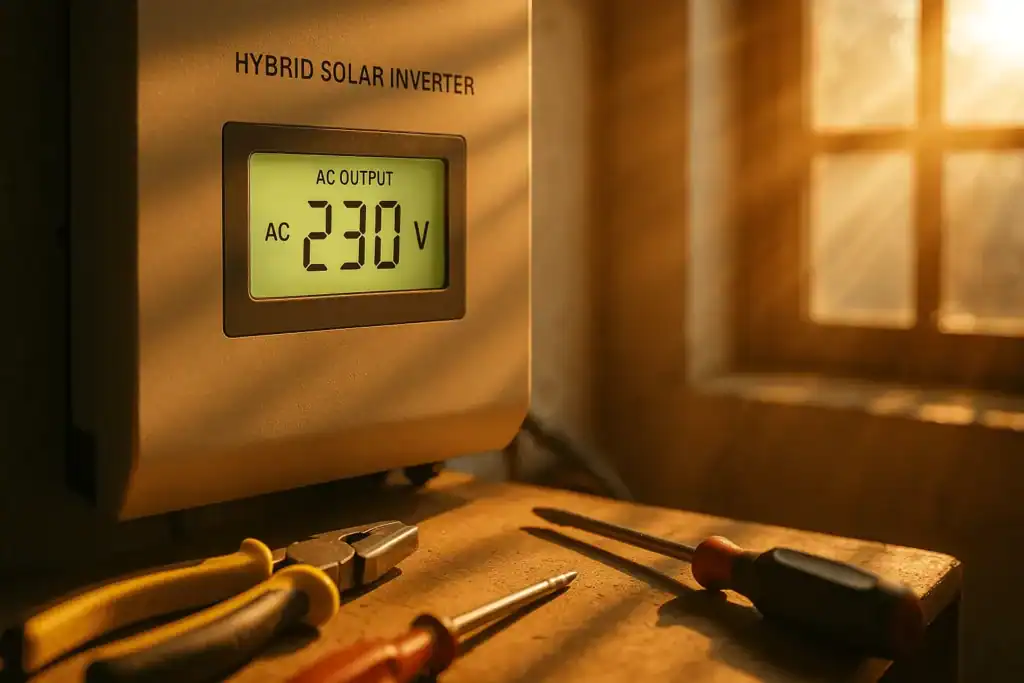
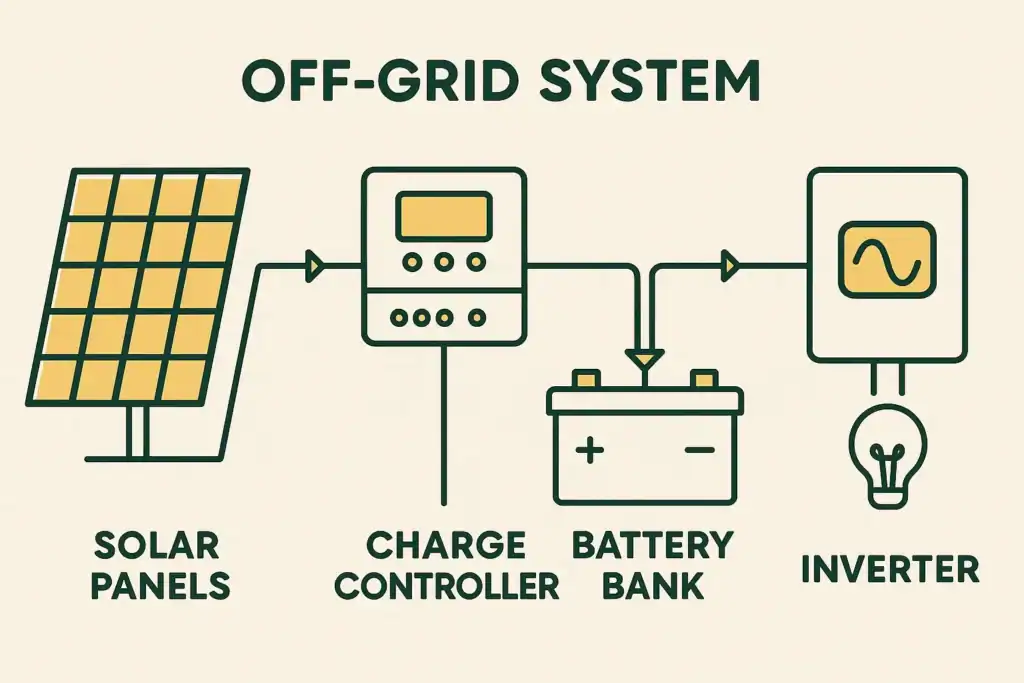
Your solar panels produce DC (direct current). Your home devices use AC (alternating current). The inverter is your translator — it converts DC to AC, safely and efficiently.
- DC → AC conversion: Converts stored solar energy to household voltage.
- Voltage regulation: Keeps your devices safe from surges.
- Battery management: Works with charge controllers to keep batteries healthy.
Gridova Insight: A quality inverter doesn’t just convert power — it protects your freedom from outages.
Types of Inverters (and Which You Actually Need)
There are many kinds out there, but only a few truly fit off-grid living:
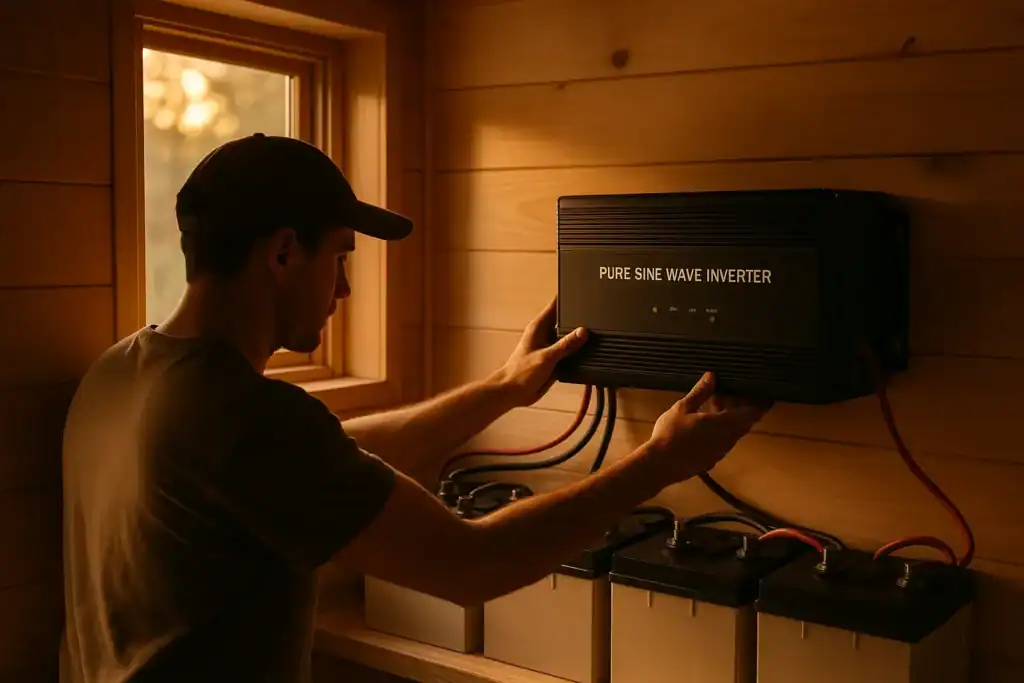
- Pure Sine Wave: Smooth, clean power — ideal for sensitive electronics and appliances.
- Modified Sine Wave: Budget-friendly, fine for basic lighting or tools.
- Hybrid Inverter: Combines solar, battery, and grid backup — perfect for flexible systems.
If your cabin or van uses laptops, TVs, or fridges, stick with Pure Sine Wave. It’s quieter, safer, and makes your batteries last longer.
Step-by-Step: Setting Up Your Inverter
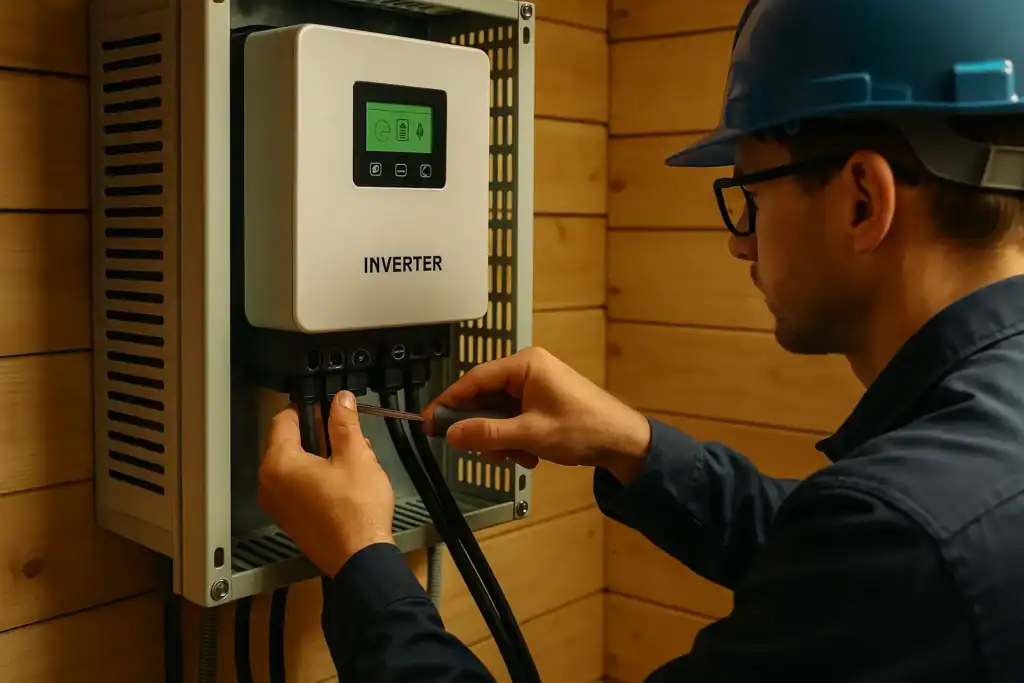
- Check compatibility: Your inverter voltage (12V, 24V, 48V) must match your battery bank.
- Mount in a cool, dry spot: Heat kills efficiency.
- Connect to batteries first: Red to positive (+), black to negative (−).
- Then connect to solar charge controller: Follow manual polarity — wrong connections cause shorts.
- Test with a small load: Try a lamp or fan first, then scale up.
Safety Tip: Always disconnect your panels before wiring. A sunny mistake can spark real fireworks 🔥
Choosing the Right Size
To size your inverter, add up your daily device wattages, then multiply by 1.2 for efficiency. For example:
Example Setup:
Lights (100W) + Laptop (60W) + Mini Fridge (200W) = 360W total → choose a 500W inverter minimum.
If you plan to expand your system later, invest in a 1,000W pure sine wave model — it’ll last years.
Maintenance & Safety
- Keep vents dust-free — use a soft brush monthly.
- Tighten cables every 3 months (thermal expansion can loosen them).
- Monitor temperature: most inverters like it under 40°C.
Gridova Insight: A clean inverter runs cooler, lasts longer, and keeps your nights bright off-grid.
Conclusion — Smarter Power, Greater Freedom
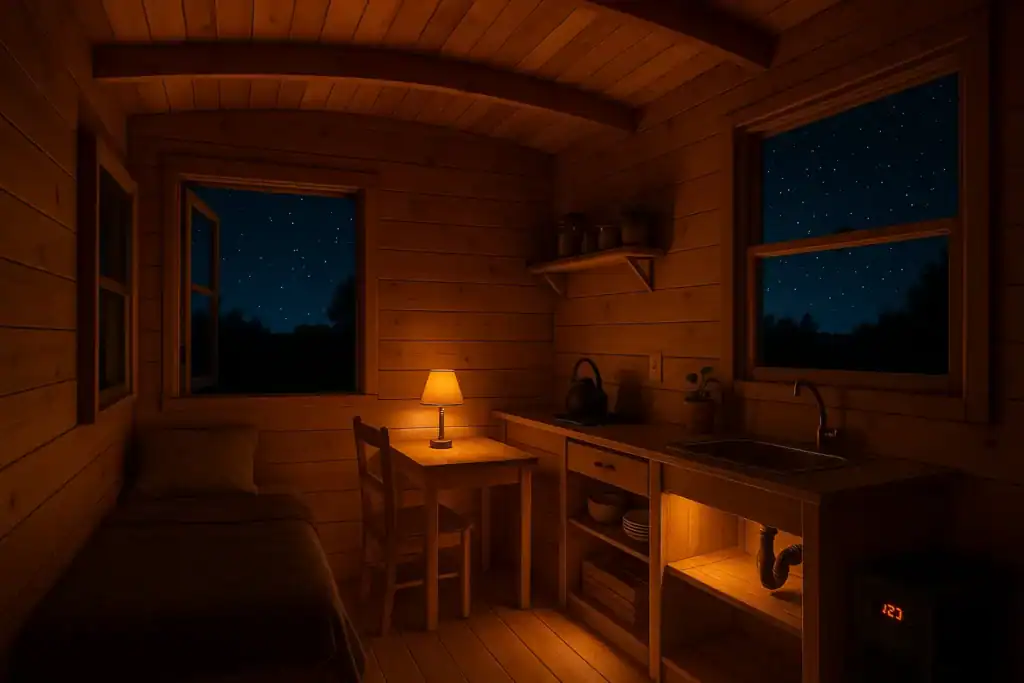
Once your inverter is set up right, you’ll feel it — your solar system comes alive. Every switch, every hum of power means you’re living freer, cleaner, and smarter.
Next project idea: Solar Battery Storage — Power Your Nights Off-Grid
Last updated: November 9, 2025

Lio Verdan writes about solar energy, off-grid living, and eco-innovation through Gridova Living — a platform dedicated to energy freedom and sustainable technology.