Step 1: Calculate Your Daily Energy Use
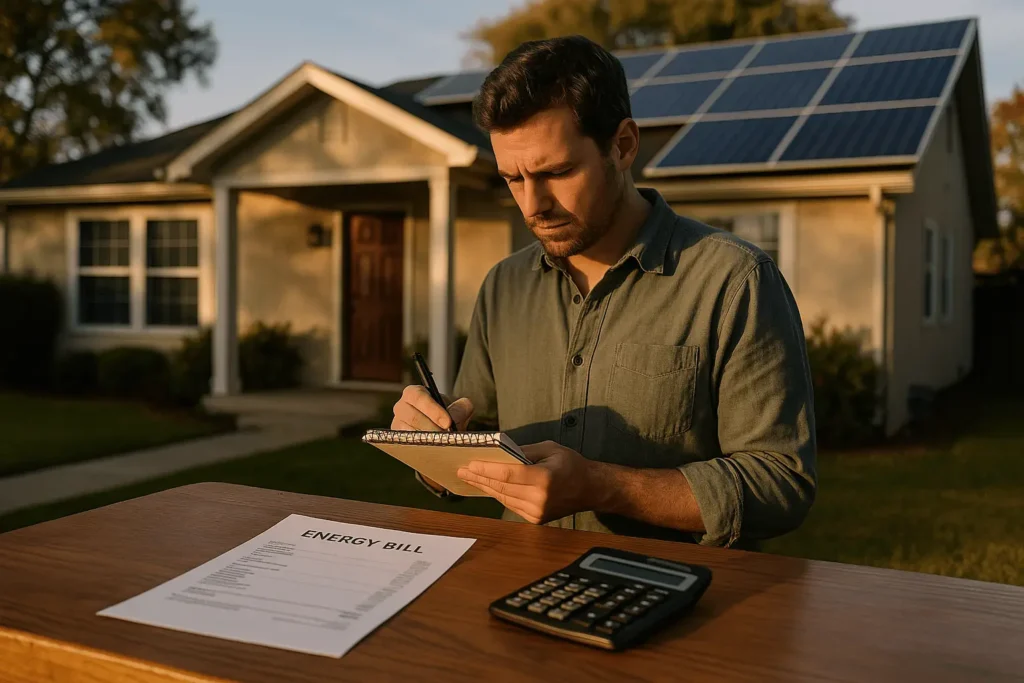
Start by listing what you actually use every day. Not what you think you’ll use—what you use now. Grab your electric bill or walk through your home with a notepad.
| Appliance | Watts | Hours/Day | Daily Wh |
|---|---|---|---|
| LED lights (10 bulbs) | 100W | 5h | 500 Wh |
| Refrigerator | 150W | 24h | 3,600 Wh |
| Laptop | 65W | 8h | 520 Wh |
| Phone chargers (2) | 20W | 3h | 60 Wh |
| Water pump | 800W | 1h | 800 Wh |
| Total | — | — | 5,480 Wh |
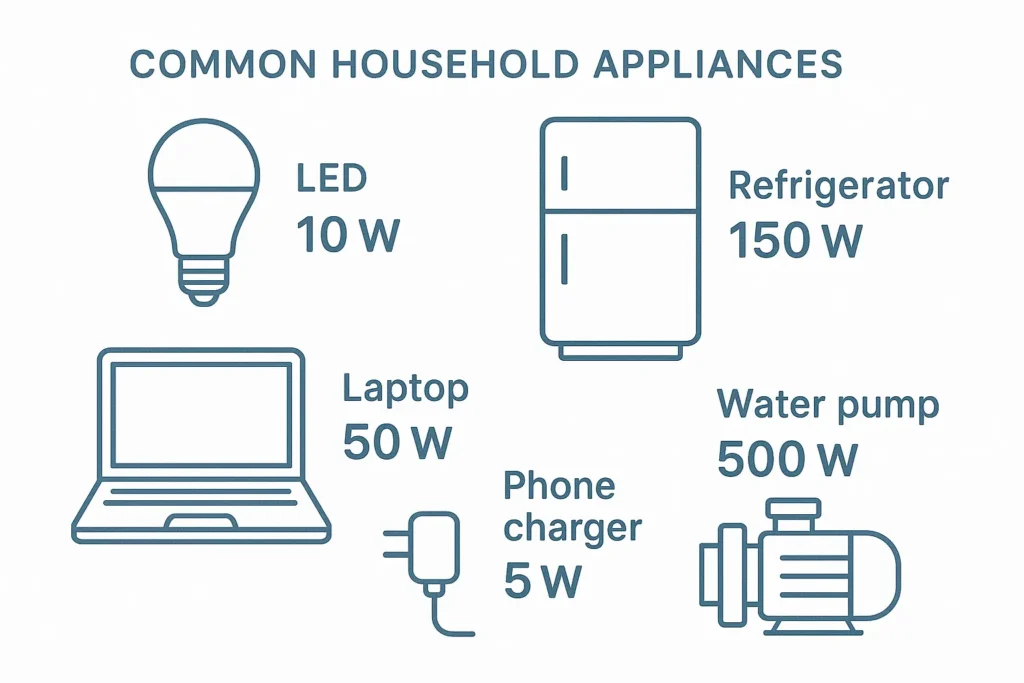
This example home uses about 5.5 kWh per day. Your number will be different. Add 20% for system losses (inverter inefficiency, wire resistance, dust on panels). So: 5,480 × 1.2 = 6,576 Wh per day.
Step 2: Figure Out How Much Sun You Actually Get
Solar panels don’t produce full power all day. A 300W panel might only give you 300W for 4–6 hours depending on where you live.
Check your location’s “peak sun hours” online. Most places in the US get 4–6 hours. Let’s use 5 hours as an average.
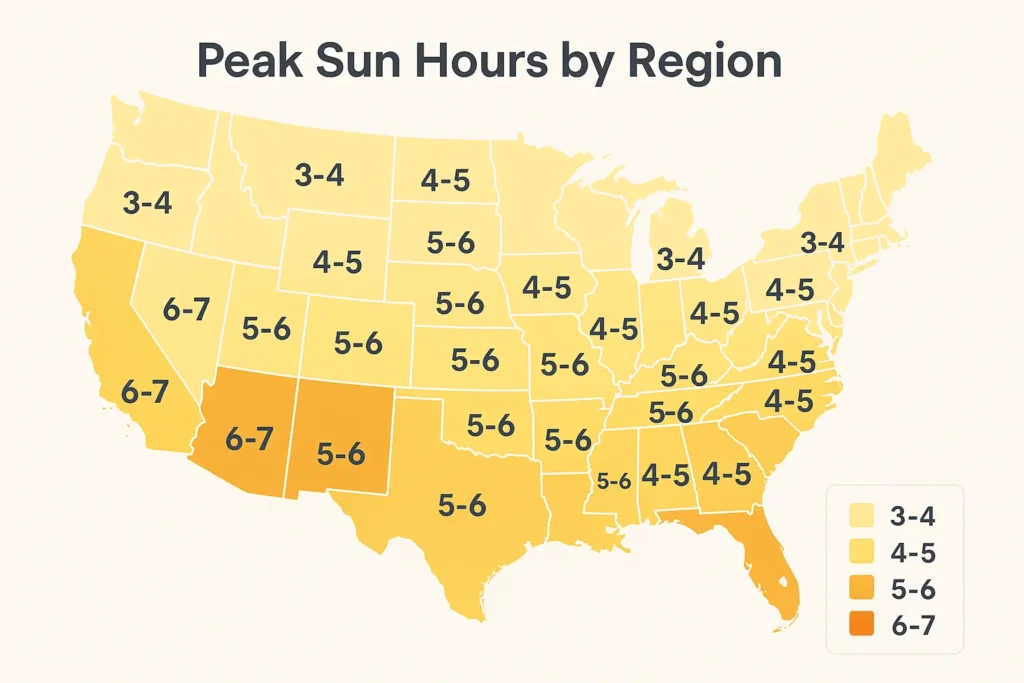
If you need 6,576 Wh per day and you get 5 hours of good sun:
6,576 Wh ÷ 5 hours = 1,315 watts of solar panels
Round up for safety. You’d need about 1,400–1,500 watts of panels. That’s either five 300W panels or four 400W panels.
Step 3: Don’t Forget Battery Storage
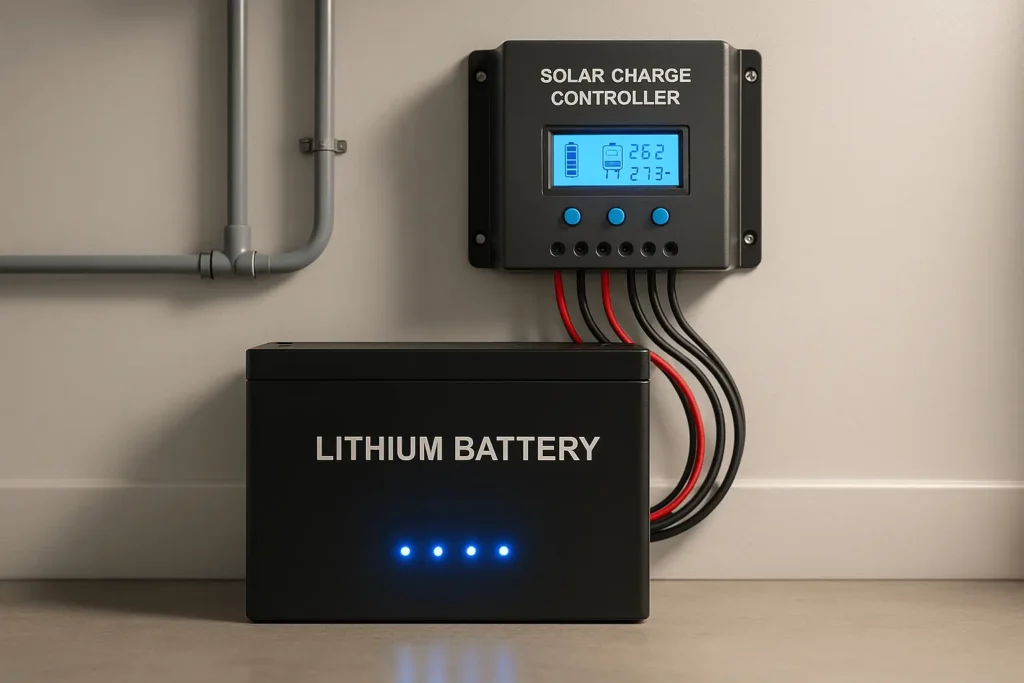
Solar panels only work when the sun’s out. You need batteries to store power for nights and cloudy days.
A good rule: store 2–3 days of power. For our example home using 6,576 Wh daily:
- 2 days storage: 6,576 × 2 = 13,152 Wh = ~13 kWh battery
- 3 days storage: 6,576 × 3 = 19,728 Wh = ~20 kWh battery
Most people go with 2 days of backup. If you live somewhere with lots of cloudy weather, bump it to 3 days. You can start small and add more batteries later as you see how your system performs.
What About Inverter Size?
Your inverter converts DC power from panels into AC power for your home. Size it based on your peak load—the most watts you’ll use at once, not your daily total.
Look at your table again. Add up everything that might run at the same time. In our example:
Fridge (150W) + Lights (100W) + Laptop (65W) + Water pump (800W) = 1,115W peak
Get an inverter rated at least 25% higher than your peak: 1,115 × 1.25 = ~1,400W. A 2,000W inverter gives you room to grow and handles startup surges from motors and pumps.
Quick Solar System Shopping List
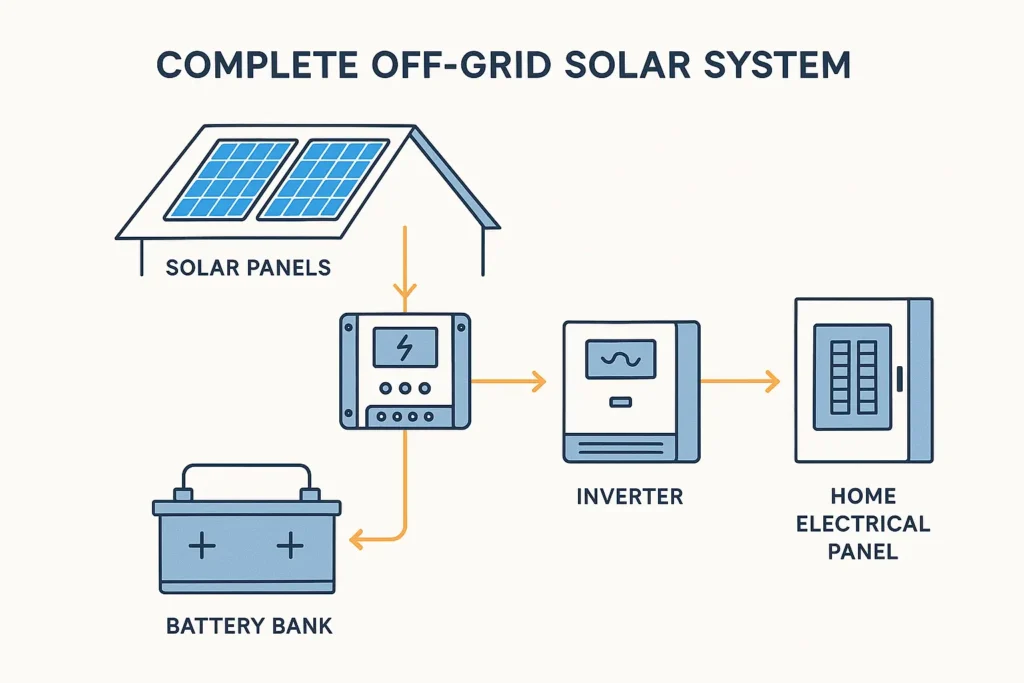
Based on our example 6.5 kWh/day home:
- Solar panels: 1,500W (5× 300W panels)
- Battery storage: 13–20 kWh (lithium or lead-acid)
- Inverter: 2,000W pure sine wave
- Charge controller: 40–60A MPPT
- Wiring, breakers, mounting: As needed for your setup
If you’re just starting out and want a simpler plug-and-play option, some all-in-one systems handle the basics without much technical knowledge. They won’t power a full house, but they’re good for cabins or learning the ropes before going bigger.
Common Mistakes People Make
Underestimating power use. Track your usage for a week, not one day. Weekends are different from weekdays.
Ignoring seasonal changes. Winter sun is weaker. If you size your system for summer, you might run short in December.
Buying cheap charge controllers. A good MPPT controller can boost your panel output by 20–30% compared to basic PWM models. Worth the extra cost.
Skipping the inverter quality. Cheap modified sine wave inverters will damage sensitive electronics. Always go pure sine wave for off-grid homes.
Should You DIY or Hire a Pro?
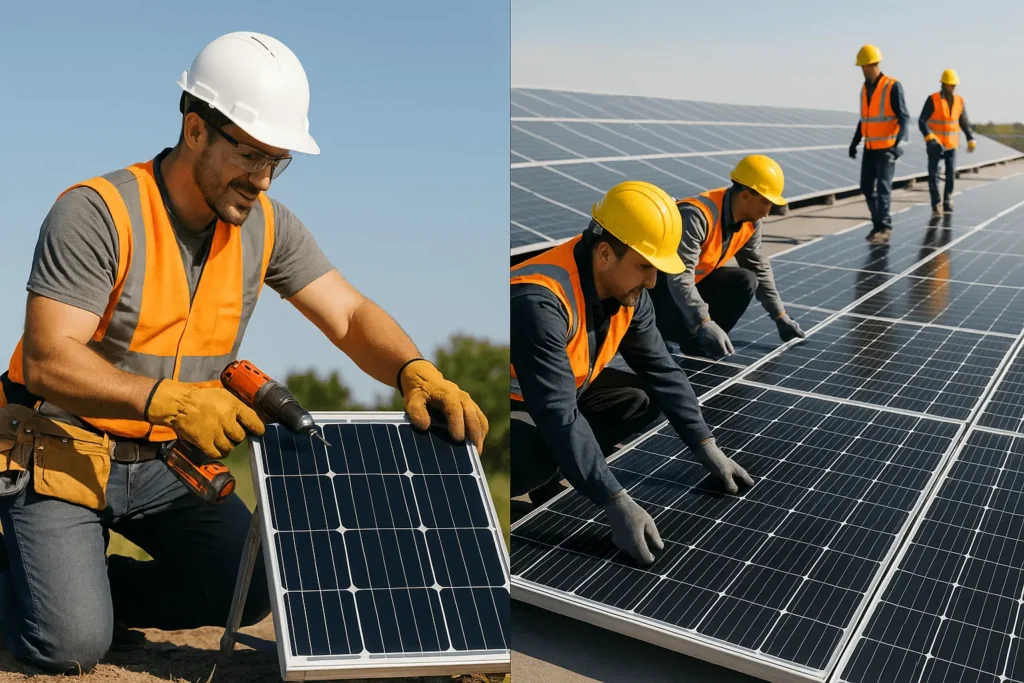
If you’re handy and your system is under 3 kW, DIY is doable. You’ll save thousands. Just follow local codes and get permits where required.
For larger systems or if you’re connecting to complex loads like well pumps or HVAC, hire someone. A bad install can be dangerous and void warranties.
Either way, knowing your numbers means you won’t get oversold. You’ll know exactly what you need before anyone tries to upsell you on panels you don’t actually need.
Not Ready for Full Solar Yet? Start Smaller
Solar panel systems work great, but they’re not the only way to cut electricity costs. Some people aren’t ready to install panels or don’t have the roof space. Others just want to lower their bills now without waiting months for permits and installation.
If that sounds like you, there’s a middle ground. Small energy optimization devices can reduce what you pull from the grid without any major installation. They’re especially useful if you’re renting, living in an apartment, or testing the waters before committing to a full solar setup.
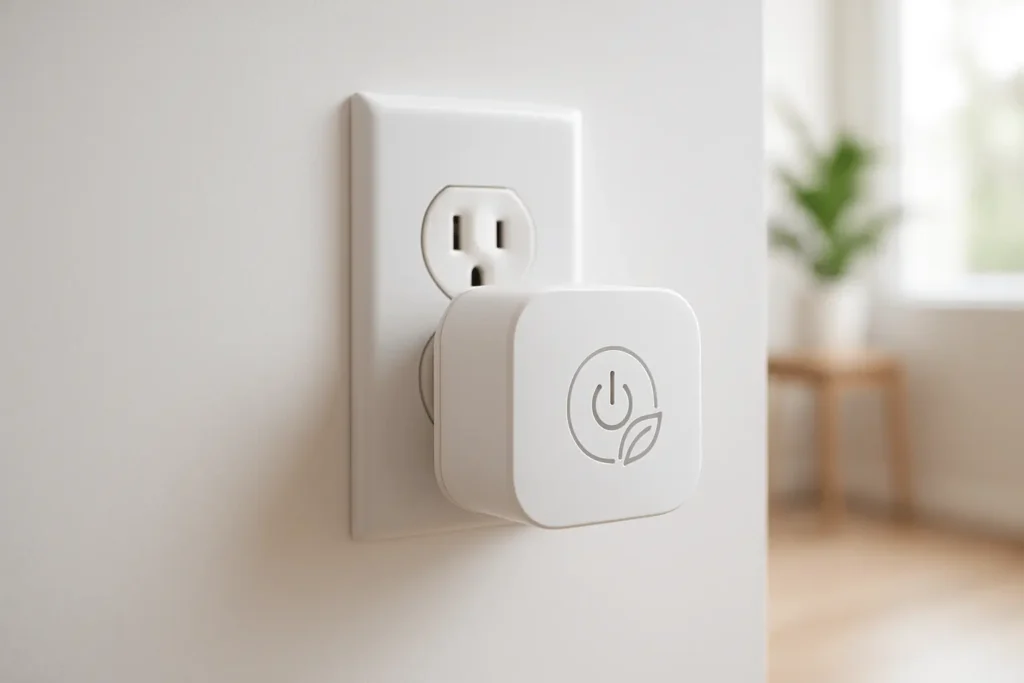
One option that’s been getting attention lately is the Energy Revolution System. It’s a compact device designed to optimize your home’s energy flow and reduce waste. You don’t need an electrician to install it, and it doesn’t depend on sunlight or weather. Just plug it in, and it starts working to stabilize your power usage.
It won’t replace a full solar array, but if you’re looking for something simple that brings your monthly bill down by 20–40%, it’s worth considering. Especially if you’re in the “thinking about solar” phase but not quite ready to pull the trigger on panels and batteries.
👉 Check out the Energy Revolution System here
What’s Next?
Once you know your solar needs, check out how to set up your inverter properly so everything runs smoothly. And if you’re planning to go fully off-grid, our simple water system guide covers another critical piece of independent living.
Solar doesn’t have to be complicated. Calculate your real usage, size your system correctly, and you’ll have reliable power without the guesswork.
FAQ
How many solar panels do I need for a 2,000 sq ft home?
It depends on your power usage, not square footage. A typical home uses 20–30 kWh per day. You’d need about 5–8 kW of panels (15–25 panels) depending on your location’s sun hours.
Can I run my AC on solar panels?
Yes, but AC units use a lot of power. A central AC can draw 3,000–5,000W. You’d need a large solar array and battery bank, or consider mini-split systems which are much more efficient.
How long do solar panels last off-grid?
Quality panels last 25–30 years with minimal maintenance. Batteries need replacement every 5–15 years depending on type (lithium lasts longer than lead-acid).
What size solar system do I need to live off-grid?
Most off-grid homes need 3–10 kW of solar panels depending on energy use. Calculate your daily kWh, multiply by 1.2, then divide by your area’s peak sun hours to get your panel wattage.
Do I need a permit for off-grid solar?
It depends on your location. Many areas require permits for systems over 1 kW or any grid-tied systems. Check local building codes before installing.

Lio Verdan writes about solar energy, off-grid living, and eco-innovation through Gridova Living — a platform dedicated to energy freedom and sustainable technology.