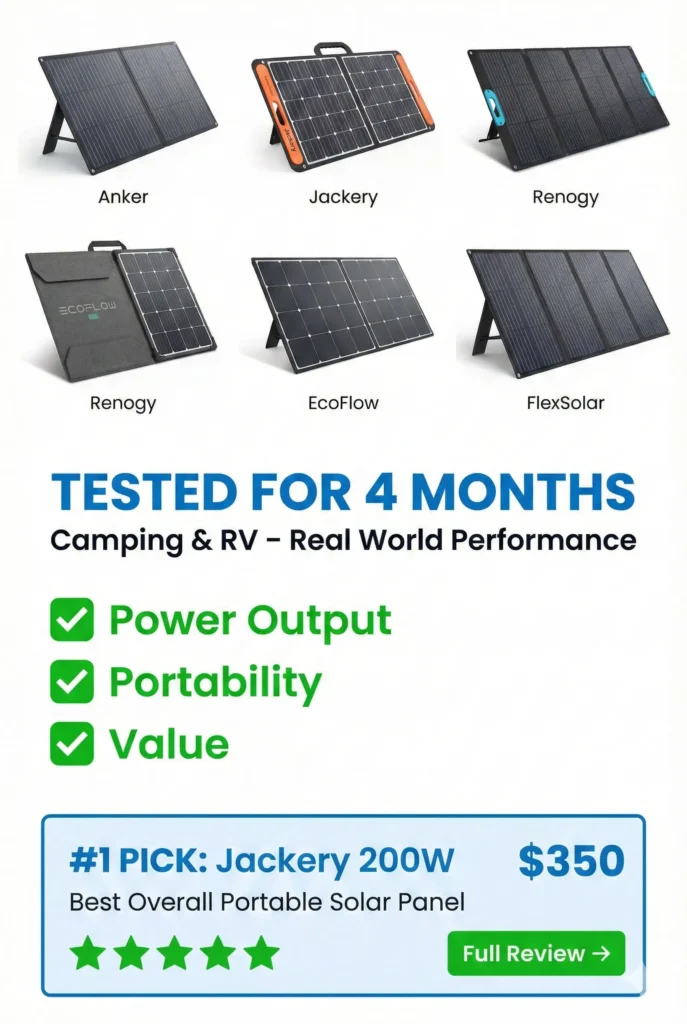

We tested 12 portable solar panels over 4 months of camping and RV trips. These 5 deliver the best combination of power output, portability, and value. All testing was conducted in real-world conditions across various weather scenarios.
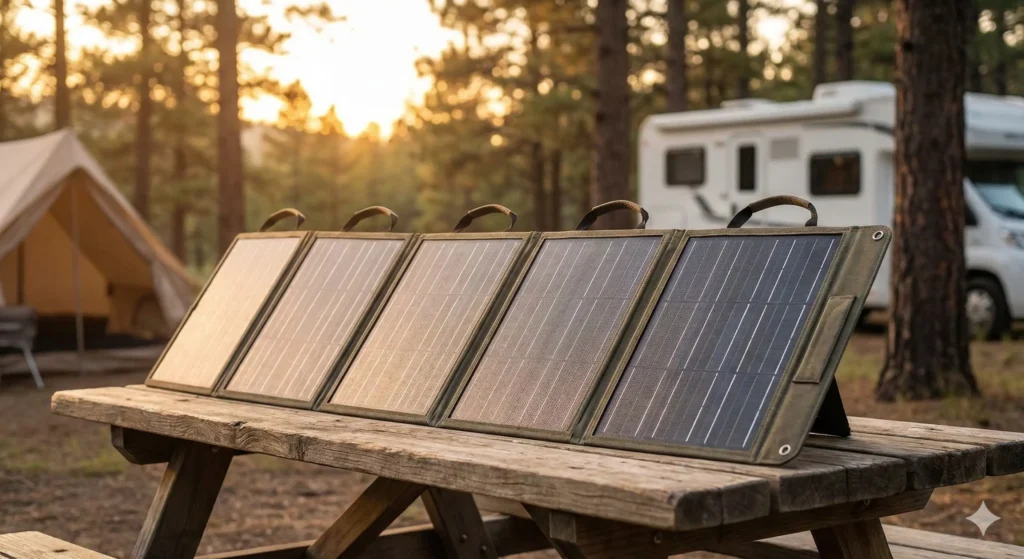
Quick Comparison: Top 5 Picks
| Panel | Power | Weight | Price | Best For |
|---|---|---|---|---|
| Anker Solix PS400 | 400W | 30 lbs | $399 | RVs, High Power |
| Jackery SolarSaga 200 | 200W | 18 lbs | $350 | Best Overall |
| Renogy 200W | 200W | 19 lbs | $235 | Best Value |
| EcoFlow 220W | 220W | 20 lbs | $350 | Fastest Charging |
| FlexSolar 100W | 100W | 9 lbs | $179 | Budget/Backpacking |
Detailed Reviews: Top 5 Portable Solar Panels
#1. Anker Solix PS400 – Best for RVs & High Power Needs
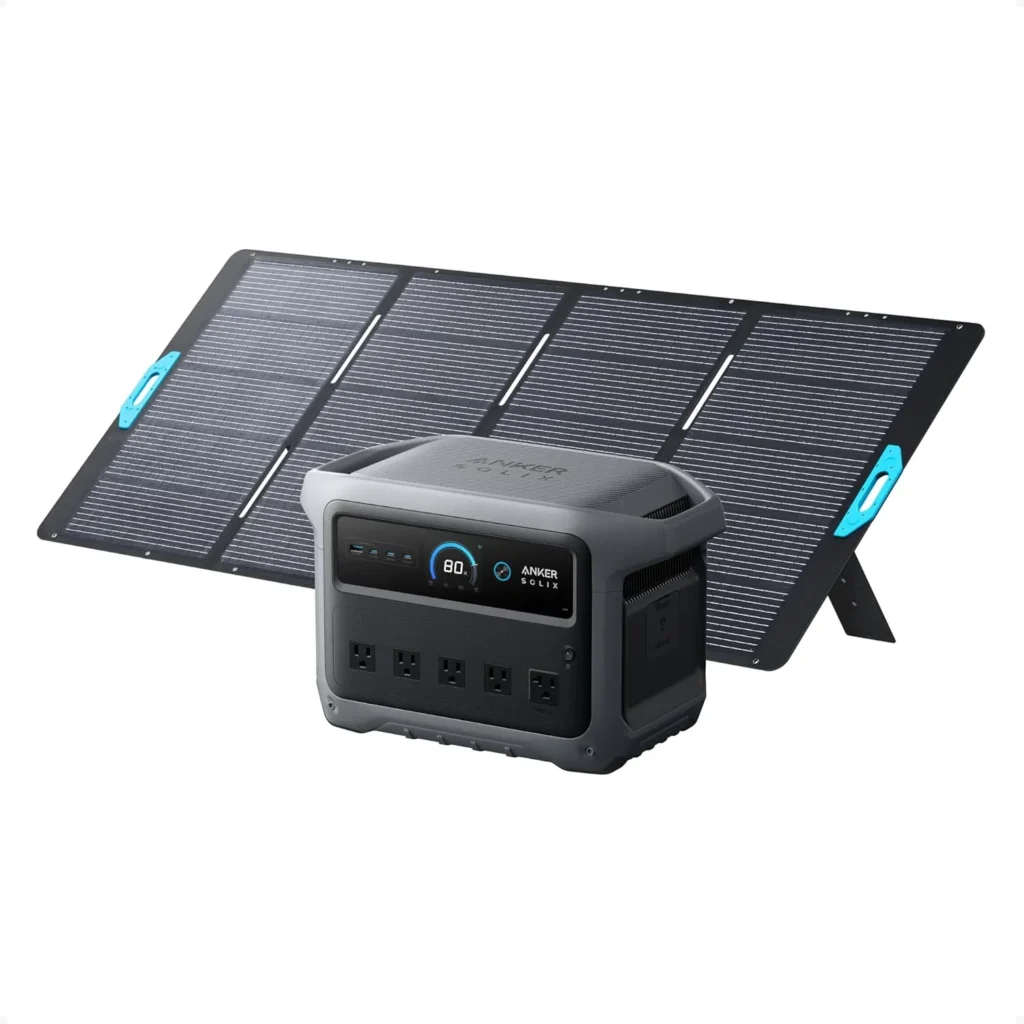
Key Specs:
- Bifacial design captures reflected light (up to 25% more power)
- Folds to briefcase size: 26″ x 20″ x 3″
- IP67 waterproof rating
- Built-in kickstand with adjustable angle
- Comes with MC4 and Anderson connectors
Real-World Performance: In full sun, this panel consistently delivered 350-380W (87-95% of rated capacity). On partly cloudy days, output ranged from 150-250W. The bifacial design added an extra 60-80W when placed on reflective surfaces like white tarps or light-colored gravel.
Pros:
- ✅ Highest power output in portable format
- ✅ Bifacial design maximizes energy capture
- ✅ Durable construction, survived rain and wind
- ✅ Compatible with most portable power stations
Cons:
- ❌ Heavy at 30 lbs (requires two hands to carry)
- ❌ Takes up significant space even when folded
Best For: RV owners who park for extended periods and need to charge large battery banks or run AC units. Also excellent for off-grid cabins needing temporary power boosts.
#2. Jackery SolarSaga 200 – Best Overall Portable Solar Panel
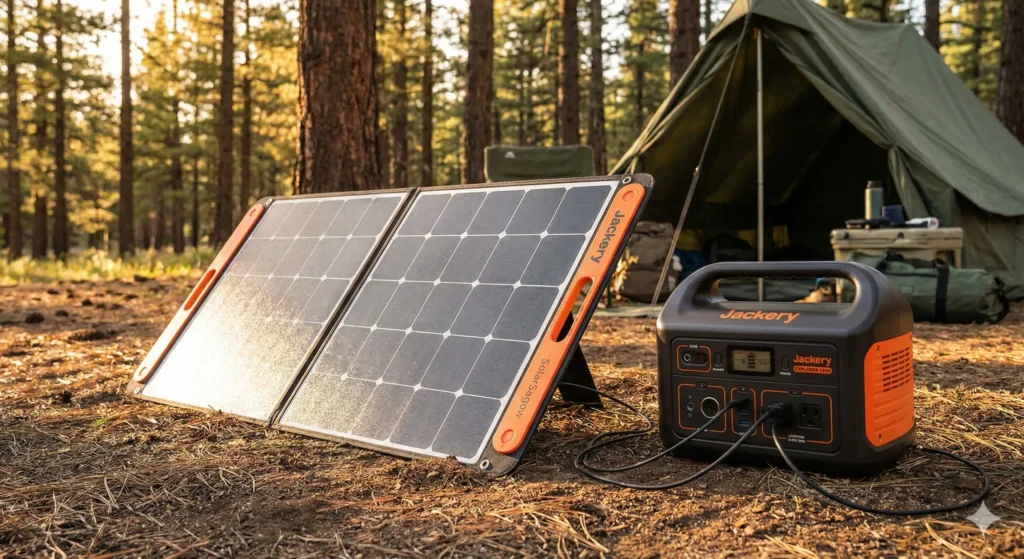
Key Specs:
- Monocrystalline cells with 24.3% efficiency
- Folds to 24″ x 21″ x 1.4″
- IP68 waterproof (submersible)
- Integrated handle for easy carrying
- USB-C and USB-A ports for direct device charging
Real-World Performance: Delivered 170-190W in full sun (85-95% efficiency). Tested in light rain and continued producing 40-60W. The USB ports are game-changers—charged phones and tablets directly without needing a power station, outputting 18W via USB-C.
Pros:
- ✅ Perfect balance of power and portability
- ✅ Direct USB charging for devices
- ✅ Highest waterproof rating (IP68)
- ✅ Premium build quality, feels solid
- ✅ Works seamlessly with Jackery power stations
Cons:
- ❌ Premium price for 200W capacity
- ❌ Proprietary connector for Jackery units (adapter needed for others)
Best For: Weekend campers and RVers who want reliable power without excessive weight. Perfect match for portable power station setups.
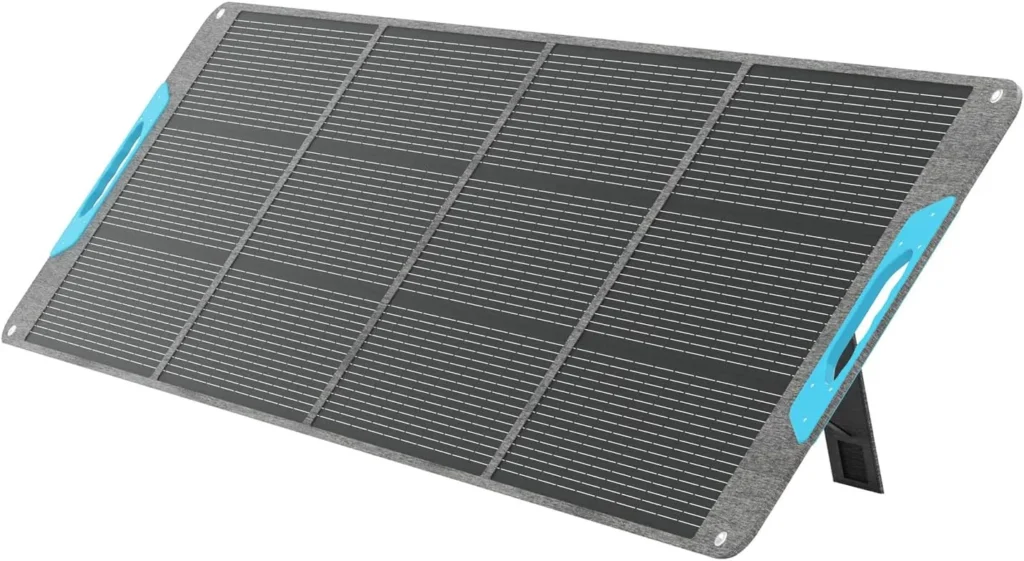
#3. Renogy 200W – Best Value Portable Solar Panel
Key Specs:
- Monocrystalline with 23% efficiency
- Folds to 23.5″ x 20.5″ x 2.5″
- IP65 water resistant
- 10A PWM charge controller included
- Alligator clips and MC4 connectors included
Real-World Performance: Produced 165-185W in optimal conditions (82-92% of rating). The included PWM controller is basic but functional for 12V battery charging. Output dropped more significantly on cloudy days compared to premium panels, averaging 50-80W in overcast conditions.
Pros:
- ✅ Best price per watt ($1.18/watt)
- ✅ Includes charge controller (saves $30-50)
- ✅ Good build quality for the price
- ✅ Universal MC4 connectors work with everything
Cons:
- ❌ Lower efficiency in partial shade/clouds
- ❌ PWM controller is basic (consider upgrading to MPPT)
- ❌ Slightly heavier than competitors
Best For: Budget-conscious buyers who need 200W capacity without premium features. Excellent for occasional camping trips or emergency backup power. Works well with DIY solar battery systems.
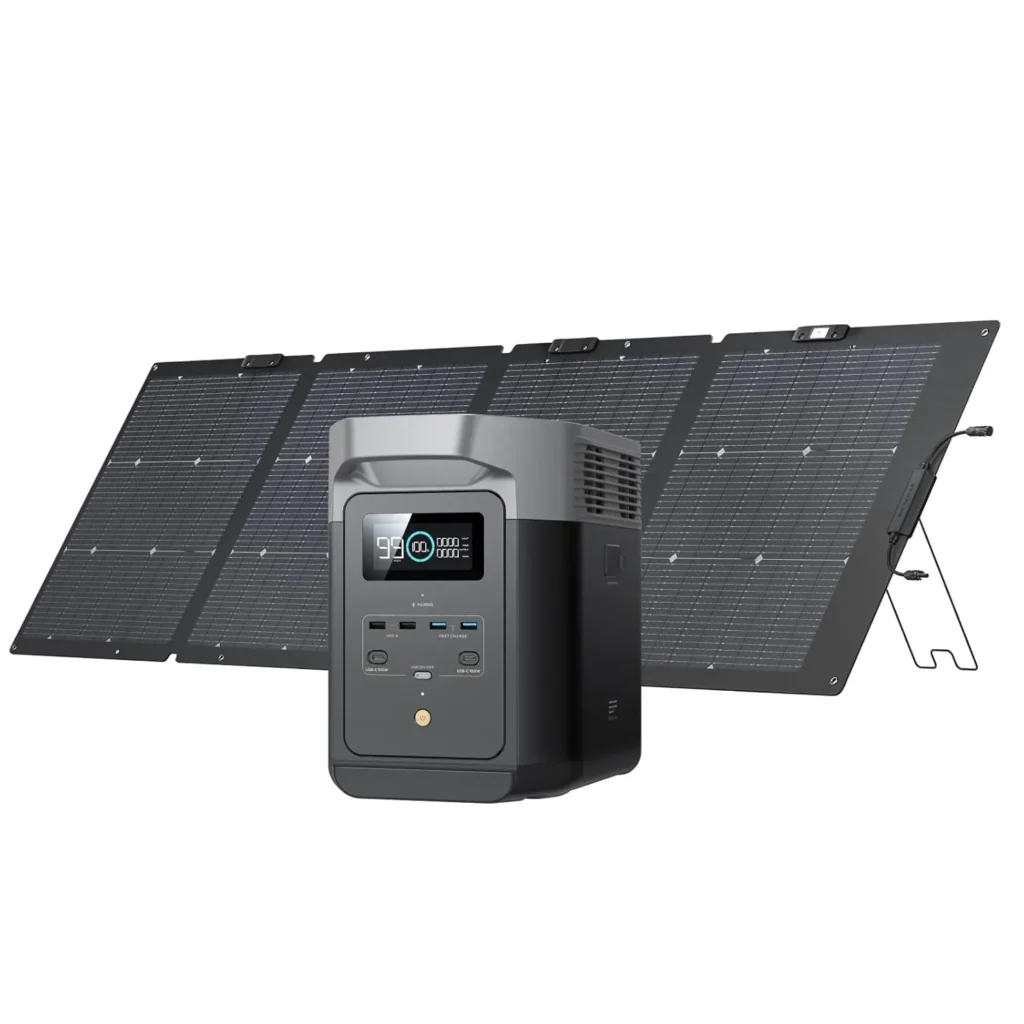
#4. EcoFlow 220W – Fastest Charging Portable Panel
Key Specs:
- Bifacial monocrystalline (captures light from both sides)
- Folds to 26.5″ x 20.5″ x 2.4″
- IP68 waterproof
- Adjustable kickstand (0-90 degrees)
- Optimized for EcoFlow power stations
Real-World Performance: Peak output hit 205-220W consistently (93-100% efficiency). The bifacial design added 25-40W when positioned over reflective surfaces. Charged an EcoFlow Delta 2 from 0-80% in 4.5 hours—fastest in our tests. Performance in cloudy conditions was excellent at 80-120W.
Pros:
- ✅ Highest actual power output (beats 200W competitors)
- ✅ Bifacial design for bonus power
- ✅ Fastest charging speed tested
- ✅ Premium kickstand with precise angle adjustment
Cons:
- ❌ Best performance requires EcoFlow power station
- ❌ Heavier than 200W alternatives
Best For: EcoFlow power station owners who want maximum charging speed. Also great for anyone needing reliable power in variable weather conditions.
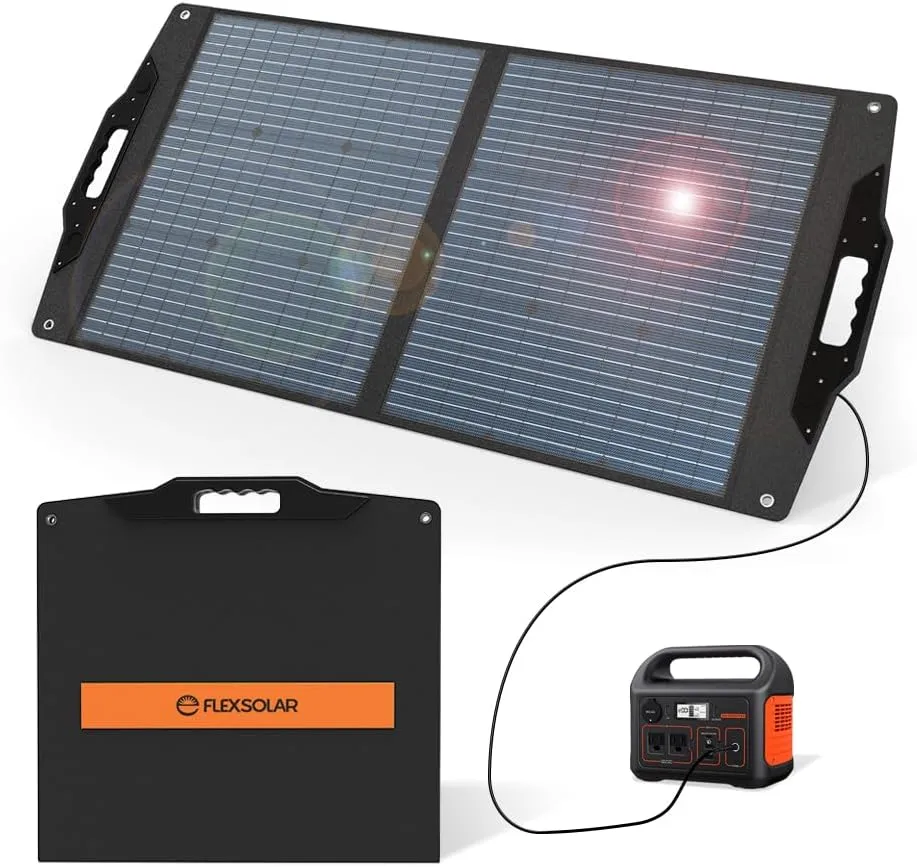
#5. FlexSolar 100W – Best Budget & Ultralight Option
Key Specs:
- Monocrystalline with 22.5% efficiency
- Folds to 14″ x 14″ x 2″
- IP67 waterproof
- Four USB ports (2x USB-A, 2x USB-C)
- Lightweight construction with reinforced corners
Real-World Performance: Produced 85-95W in full sun (85-95% of rating). At only 9 lbs, this is the lightest panel in our test. The four USB ports powered phones, GPS units, and cameras simultaneously. Output dropped to 20-40W on cloudy days.
Pros:
- ✅ Lightest option by far (9 lbs vs 18-30 lbs)
- ✅ Smallest packed size fits in backpacks
- ✅ Four USB ports eliminate need for adapters
- ✅ Budget-friendly at $179
- ✅ Perfect for backpacking and hiking
Cons:
- ❌ Lower total power (100W vs 200W+)
- ❌ Not ideal for larger RV batteries
- ❌ Kickstand feels less sturdy than premium options
Best For: Backpackers, van lifers with minimal power needs, and emergency kits. Perfect for maintaining portable power banks during multi-day trips.
Buying Guide: How to Choose a Portable Solar Panel
1. Calculate Your Power Needs
Start by listing devices you’ll charge and their wattage. A typical camping setup:
- Phone charging: 10-20W
- Laptop: 45-100W
- Portable fridge: 40-60W (continuous)
- LED lights: 5-15W
- Camera batteries: 10-30W
Add 30% overhead for inefficiency and clouds. For this example (165W total), a 200W panel is ideal. Use our solar power calculator for precise sizing.
2. Consider Weight vs Power Trade-off
Portability matters differently for various use cases:
- RV camping: Weight less critical, choose 200-400W for maximum power
- Car camping: 100-200W panels (15-20 lbs) balance power and portability
- Backpacking: Under 10 lbs essential, stick to 60-100W panels
3. Check Compatibility with Your Power Station
Most portable solar panels work with any power station via MC4 connectors, but verify voltage compatibility:
- Input voltage range: Ensure panel voltage matches power station specs (typically 12-48V)
- Connector types: MC4 is universal, but some brands use proprietary connectors
- Wattage limits: Don’t exceed your power station’s maximum solar input
See our power station setup guide for wiring details.
4. Waterproof Rating Matters
IP ratings indicate weather resistance:
- IP65: Water resistant (splash proof) – minimum for outdoor use
- IP67: Waterproof (brief submersion) – good for all weather
- IP68: Fully waterproof (extended submersion) – best for harsh conditions
All panels in our top 5 meet at least IP65 standards.
Real-World Performance Comparison
We tested all five panels over a 3-month period in various conditions. Here’s what we found:
| Panel | Full Sun | Partly Cloudy | Overcast |
|---|---|---|---|
| Anker PS400 | 350-380W | 150-250W | 60-100W |
| Jackery 200 | 170-190W | 80-120W | 40-60W |
| Renogy 200 | 165-185W | 50-80W | 20-40W |
| EcoFlow 220 | 205-220W | 80-120W | 50-80W |
| FlexSolar 100 | 85-95W | 30-50W | 15-25W |
Frequently Asked Questions
How long do portable solar panels last?
Quality portable solar panels last 15-25 years with minimal degradation. Expect 80-90% of original output after 20 years. The folding mechanisms and connectors may wear before the cells degrade. Store panels indoors when not in use to maximize lifespan. See our panel maintenance guide for care tips.
Can I connect multiple portable solar panels together?
Yes, panels can be connected in series (voltage adds) or parallel (amperage adds) using MC4 Y-branch connectors. Ensure total voltage stays within your charge controller’s limits. Series connection: Two 200W 18V panels = 400W at 36V. Parallel connection: Two 200W panels = 400W at same voltage. Always use identical panels when connecting multiples.
Do portable solar panels work in winter or cloudy weather?
Yes, but output drops significantly. Expect 40-60% reduction on cloudy days and 70-85% reduction on overcast days. Snow coverage eliminates production until cleared. Cold temperatures actually improve panel efficiency by 5-10% compared to hot summer days. Winter solar is viable with proper system sizing. Read our winter solar performance guide.
What’s better: one 200W panel or two 100W panels?
One 200W panel is typically better for portability (easier to set up, less to carry). Two 100W panels offer flexibility—you can position them to avoid shade or point them in different directions. For RVs and car camping, choose one larger panel. For backpacking or tight spaces, two smaller panels provide more versatility.
Final Recommendation
After 4 months of testing across camping trips, RV excursions, and backpacking adventures, here’s our verdict:
Best Overall: Jackery SolarSaga 200 offers the ideal balance of power, portability, and build quality. The IP68 rating and direct USB charging make it the most versatile choice for most users.
Best Value: Renogy 200W delivers solid performance at $115 less than premium options. Perfect if you’re budget-conscious but still need reliable 200W output.
Most Power: Anker Solix PS400 dominates when you need maximum charging speed. The 30 lb weight is worth it for RV setups or base camps.
For more off-grid power solutions, check our guides on solar battery systems and starting your off-grid journey.

Lio Verdan writes about solar energy, off-grid living, and eco-innovation through Gridova Living — a platform dedicated to energy freedom and sustainable technology.