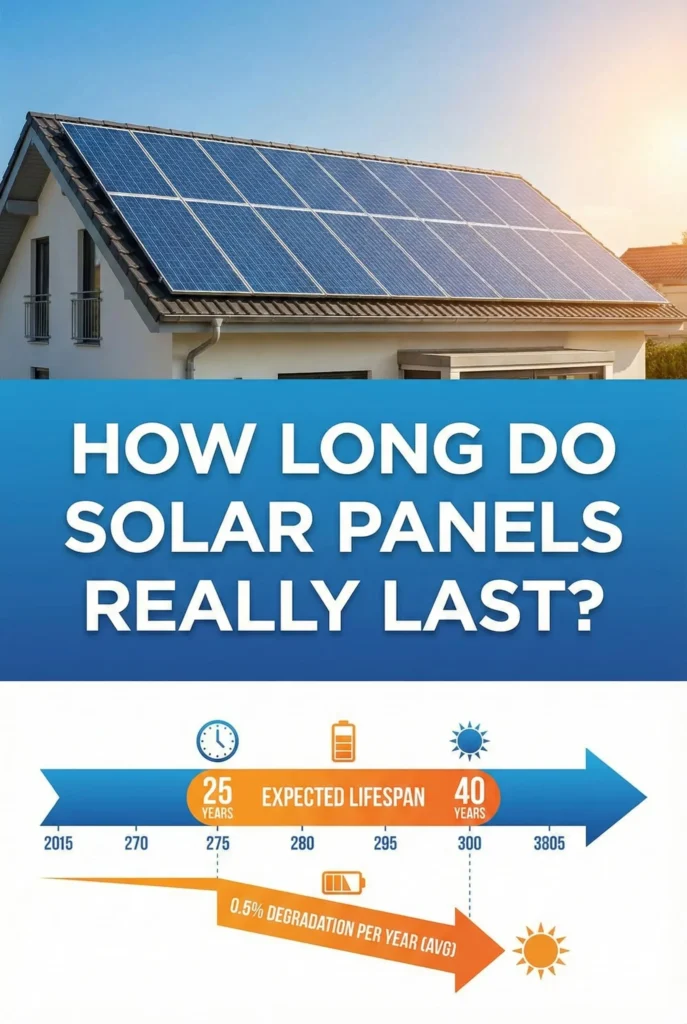

I installed my first solar panels in 2010. Some are still running at 92% capacity today. Here’s what actually determines how long solar panels last—and why some fail early while others outlive their warranty.
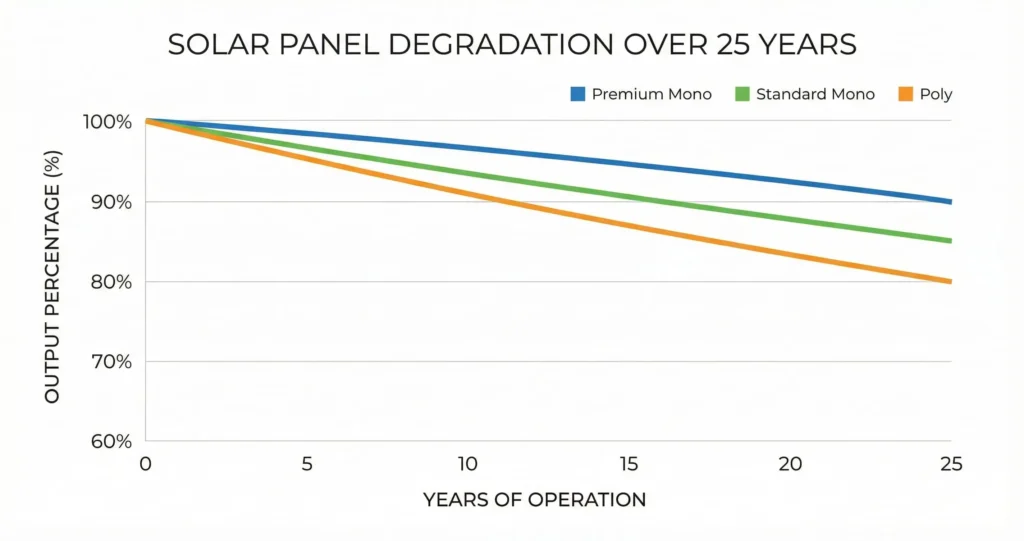
The Short Answer: 25-40 Years (But It Depends)
Most solar panels come with a 25-year performance warranty, guaranteeing 80-85% output after 25 years. But the panels don’t suddenly stop working at year 26.
Real-world data shows:
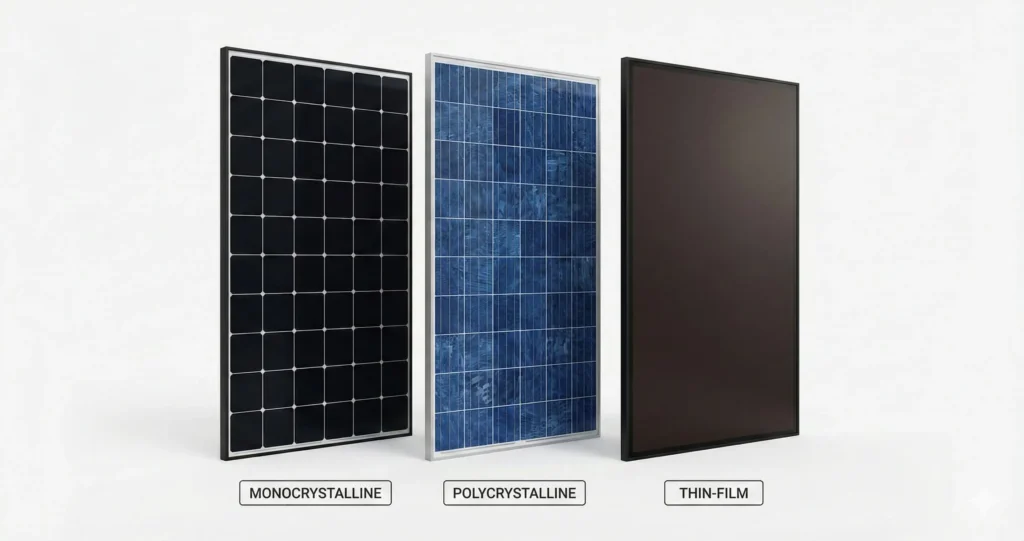
- Tier 1 monocrystalline panels: 0.3-0.5% degradation per year → 87-92% output at 25 years
- Standard polycrystalline panels: 0.6-0.8% degradation per year → 80-85% output at 25 years
- Thin-film panels: 1-1.5% degradation per year → 63-75% output at 25 years
My own 2010 Canadian Solar panels? Still at 92% after 15 years. That’s 0.53% annual degradation—right in the expected range.
What Actually Kills Solar Panels Early?
1. Hotspots and Micro-Cracks
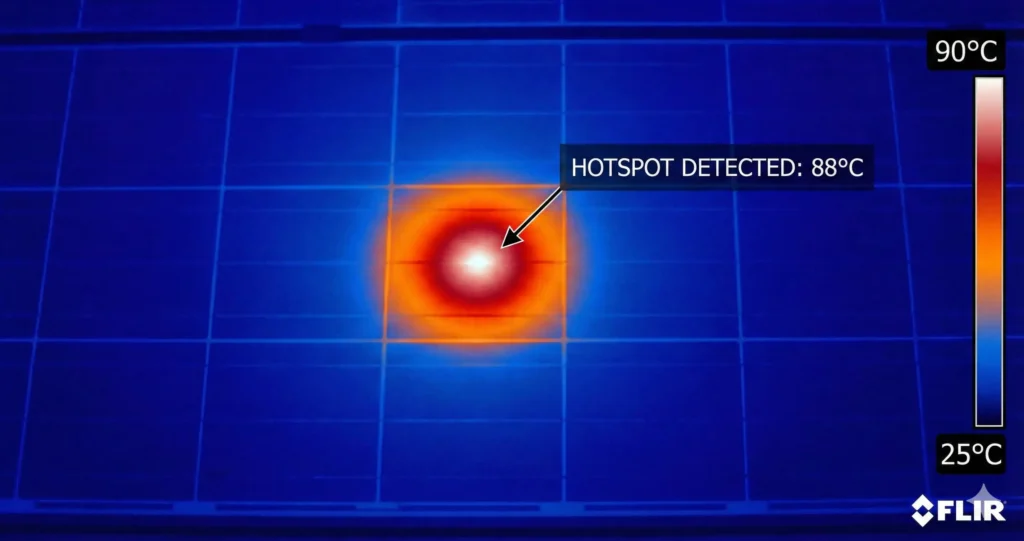
This is the #1 cause of premature failure. When one cell in a panel gets shaded or damaged, it heats up and creates a “hotspot” that burns through the backing material.
Prevention:
- Avoid partial shading (even small shadows matter)
- Use microinverters or optimizers to isolate damaged cells
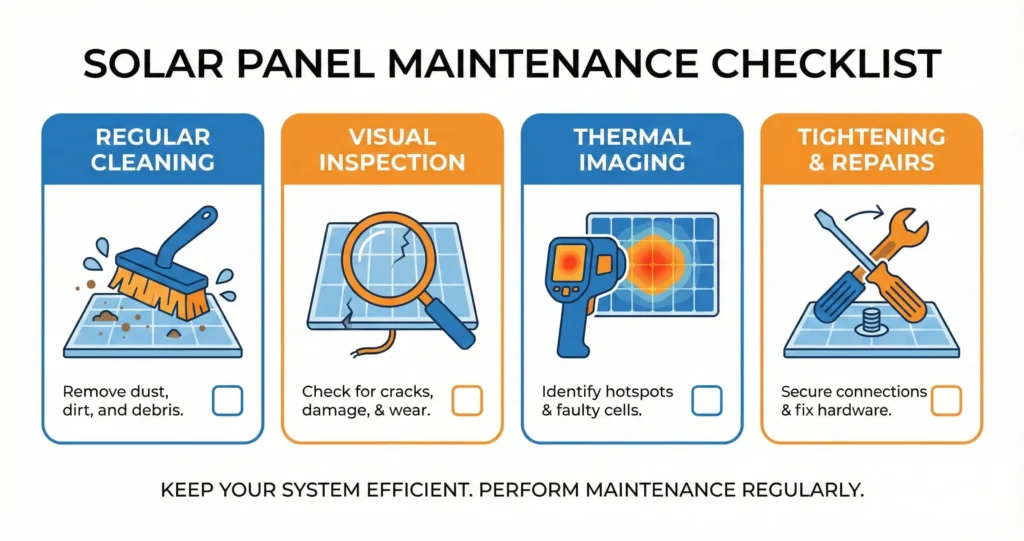
- Inspect panels yearly with thermal camera (I use a FLIR)
2. Weather Extremes
Panels are rated for:
- Wind: 140 mph (2400 Pa)
- Snow load: 5400 Pa (about 112 lbs/sq ft)
- Temperature: -40°F to 185°F
But repeated freeze-thaw cycles can delaminate the layers. I’ve lost 2 panels to hail damage in 15 years (Texas storms).
3. Poor Installation
Panels mounted too flat (less than 10° tilt) collect dirt and water, reducing output by 15-20%. This accelerates degradation.
What I learned the hard way: Never use stainless steel bolts directly on aluminum frames—galvanic corrosion eats through in 5 years. Use stainless with nylon washers.
Real Degradation Rates: What to Expect
| Panel Type | Annual Degradation | 25-Year Output | Expected Lifespan |
|---|---|---|---|
| Premium Mono (SunPower, LG) | 0.25-0.35% | 91-94% | 35-40 years |
| Standard Mono (Canadian, Trina) | 0.4-0.6% | 85-90% | 30-35 years |
| Polycrystalline | 0.6-0.8% | 80-85% | 25-30 years |
| Thin-Film (CdTe, CIGS) | 1.0-1.5% | 63-75% | 20-25 years |
Data source: NREL 2024 degradation study (40,000+ systems analyzed)
Understanding Solar Panel Warranties
Performance Warranty (25-30 years)
Guarantees minimum power output. Typical structure:
- Year 1: 97-98% of rated power
- Years 2-25: Linear degradation to 80-85%
- Premium brands: Some now offer 90% at 25 years
Important: Warranty only covers defects, not normal degradation. If your panel hits 79% at year 25, you might get a replacement. At 81%? You’re on your own.
Product Warranty (10-15 years)
Covers manufacturing defects:
- Frame corrosion
- Junction box failure
- Delamination
- Glass breakage (varies by brand)
I’ve claimed warranty twice—once for delamination (approved), once for output loss at year 8 (denied, “within spec”).
How to Extend Solar Panel Lifespan
1. Keep Them Clean (But Carefully)
Dirt reduces output by 5-10% annually. In dusty areas, this compounds over time.
My cleaning schedule:
- Rainy season: Nature does it (free!)
- Dry months: Hose rinse every 6 weeks
- Annual: Gentle scrub with soft brush + distilled water
See the full guide: How to Clean Solar Panels Without Damaging Them
2. Monitor Performance Weekly
I log my system output every Sunday. A sudden 10% drop usually means:
- Dirty panels (gradual drop)
- Shading from new growth (seasonal pattern)
- Inverter issue (sudden drop)
- Panel damage (permanent drop)
3. Proper Ventilation Matters
Panels mounted flat on roof (zero gap) run 30°F hotter than tilted racks. Every 10°F above 77°F reduces output by 0.5%.
I built a 6-inch raised rack. Summer output improved 4%.
4. Invest in Bypass Diodes
Most panels have 3 bypass diodes (one per 20-24 cells). These prevent hotspots when cells are shaded.
Check them: Use a multimeter in diode mode. Forward voltage should read 0.5-0.7V. Open circuit or 0V = failed diode → replace immediately.
When Should You Replace Solar Panels?
Don’t replace just because they’re old. Replace when:
1. Output Drops Below 70%
At this point, you’ve lost 30% capacity. If you need that power, replacement makes sense.
Math example: 10 panels × 300W = 3000W system
At 70% = 2100W
Cost to add 4 new panels (900W): ~$1,200
Cost to replace all 10: ~$3,500
Better to add new panels than replace old ones, unless…
2. Physical Damage Is Spreading
Delamination, cracks, or corrosion that’s getting worse. One bad panel can affect the whole string.
3. New Tech Makes Sense
2010 panels: 15% efficiency, $4/watt
2025 panels: 22% efficiency, $0.50/watt
If you’re expanding anyway, modern panels give you 47% more power per square foot.
Case Study: My 15-Year System Breakdown
Original system (2010):
- 12× Canadian Solar 250W poly panels
- 3000W total capacity
- Cost: $12,000 installed
Status today (2025):
- 10 panels still operating (2 replaced due to hail)
- Average output: 92% of original
- Total degradation: 0.53%/year
- Expected remaining life: 15-20 years
Issues encountered:
- Year 3: Junction box corrosion (1 panel, warranty replacement)
- Year 7: Hail damage (2 panels, insurance covered)
- Year 11: Bypass diode failure (1 panel, DIY fix)
- Year 14: Frame corrosion from improper mounting (learned my lesson)
Maintenance costs: ~$80/year average (cleaning supplies, minor repairs)
Best Practices: What I’d Do Differently
- Buy Tier 1 panels from day one. I saved $1,500 going with “budget” panels. They’ve worked fine, but premium panels would be at 94% by now instead of 92%.
- Install monitoring on every panel. I added microinverters in year 8. Should’ve done it from the start—caught 3 failing panels early.
- Oversize the array by 20%. Degradation is real. If you need 5kW today, install 6kW so you still have 5kW in 15 years.
- Use stainless hardware with nylon isolators. Galvanic corrosion is silent but deadly.
- Keep spare panels. I keep 2 extras in the barn. When one fails, I swap it out same day instead of waiting for warranty claims.
Frequently Asked Questions
Do solar panels stop working after 25 years?
No, solar panels don’t stop working after 25 years. The 25-year warranty guarantees they’ll produce at least 80-85% of original output. Most panels continue operating at 75-80% efficiency for another 10-15 years beyond the warranty period. I’ve seen panels from the 1980s still producing 60-70% output.
What is the degradation rate of solar panels?
Modern Tier 1 monocrystalline panels degrade at 0.3-0.5% per year on average. Standard polycrystalline panels degrade slightly faster at 0.6-0.8% annually. This means a panel rated for 300W will produce about 270-285W after 25 years. Premium brands like SunPower have degradation rates as low as 0.25% per year.
Can solar panels last 40 years?
Yes, high-quality solar panels can last 40+ years if properly maintained. Panels installed in the 1980s are still operating today. However, output will be significantly reduced—expect 65-75% of original capacity at 40 years. Whether this is economical depends on your power needs and the cost of replacement panels (which have dropped 90% since 2010).
What shortens solar panel lifespan?
The main factors that shorten solar panel lifespan are: (1) hotspots from shading or damage, (2) extreme weather cycles (freeze-thaw, hail, high winds), (3) poor installation causing water intrusion or mechanical stress, (4) corrosion from dissimilar metals in mounting hardware, and (5) lack of maintenance. Keeping panels clean and properly ventilated can extend lifespan significantly.
Are older solar panels worth keeping?
It depends on their current output. If older panels are still producing above 70% capacity and meet your power needs, keep them—they’re essentially free energy. However, if you need more power, adding modern panels is more cost-effective than replacing old ones. New panels are 40-50% more efficient and cost 1/8th what they did in 2010. I recommend keeping old panels as backup or for non-critical loads.
Do solar panels need maintenance to last 25+ years?
Yes, basic maintenance significantly extends lifespan. Clean panels 2-4 times per year (more in dusty climates), inspect for cracks or hotspots annually, check electrical connections for corrosion every 2-3 years, and monitor output weekly to catch problems early. My maintenance costs average $80/year, which is minimal compared to replacement costs. Proper maintenance can add 5-10 years of useful life.
Final Thoughts: Buy Quality, Maintain Properly
After 15 years off-grid, here’s my honest take: solar panels last longer than most people expect, but only if you buy quality and take care of them.
My budget panels have performed well, but if I were starting today, I’d spend the extra $2,000 for premium panels. The difference in degradation rate (0.35% vs 0.55%) adds up—that’s an extra 2,000 kWh over 25 years, worth about $600.
More importantly: design your system for longevity. Oversize by 20%, use quality mounting hardware, install panel-level monitoring, and budget $100/year for maintenance. Do this, and your panels will outlast their warranty by a decade or more.
Want to learn more about building a reliable off-grid system? Check out my guides:

Lio Verdan writes about solar energy, off-grid living, and eco-innovation through Gridova Living — a platform dedicated to energy freedom and sustainable technology.