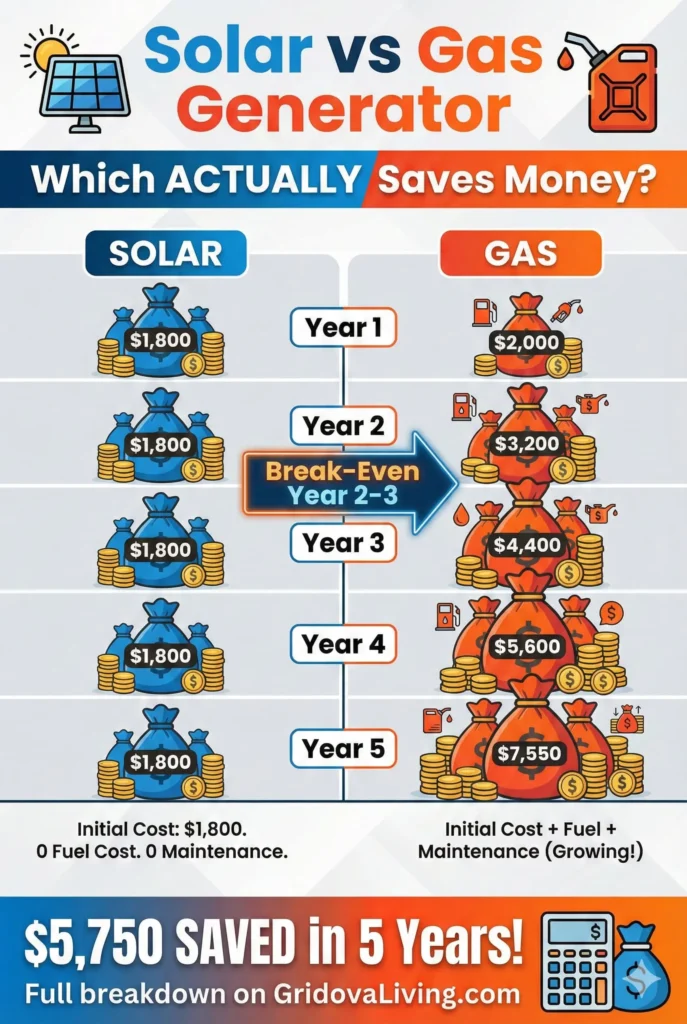

Quick Comparison Table
| Factor | Solar Generator | Gas Generator |
|---|---|---|
| Upfront Cost | $800-2,500 | $500-1,200 |
| Monthly Fuel | $0 | $50-150 |
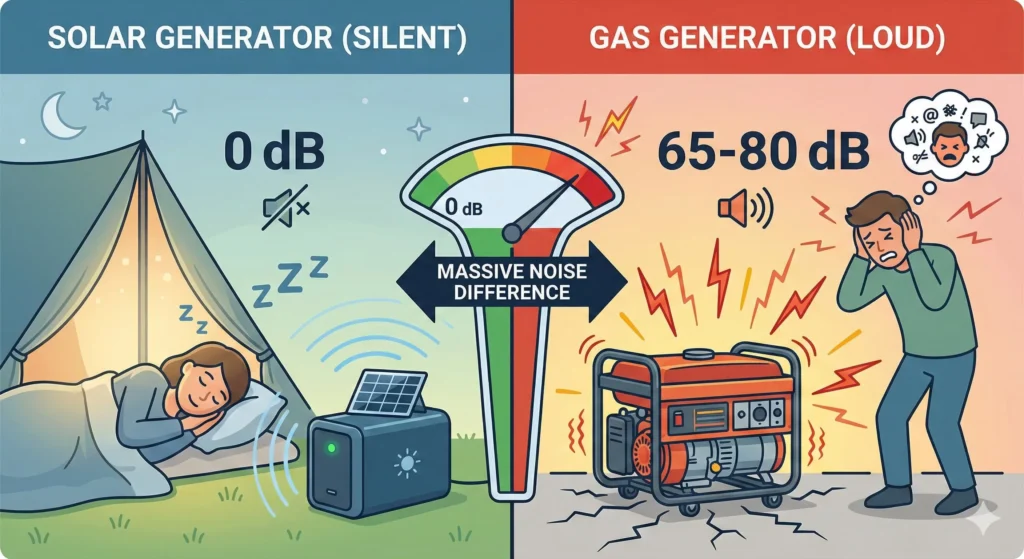
| Noise Level | Silent | 65-80 dB |
| Maintenance | Minimal | Regular (oil, spark plugs) |
| Runtime | Weather dependent | Unlimited (with fuel) |
| Indoor Use | Yes | No (CO danger) |
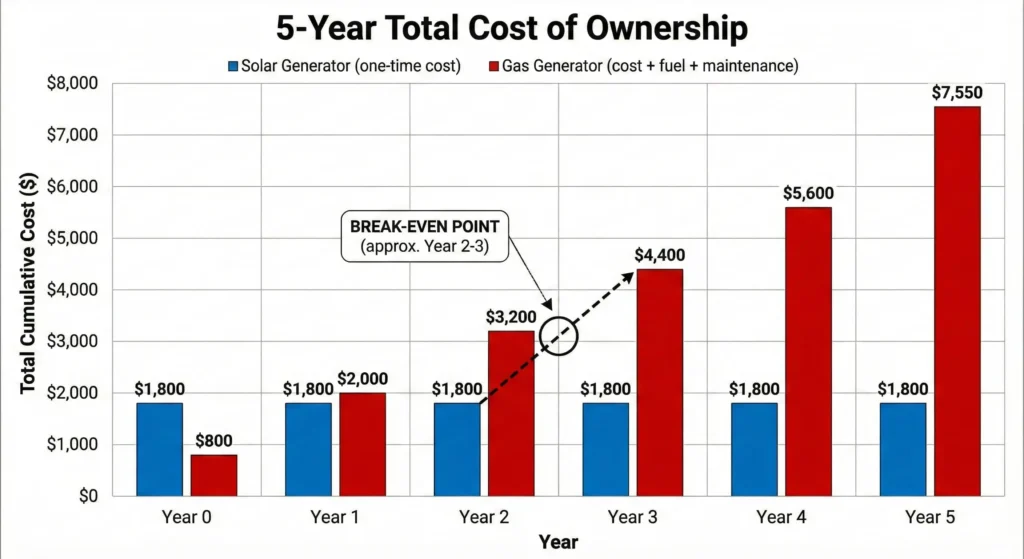
The Real Cost Over 5 Years
Gas Generator (3,500W):
Initial: $800
Fuel: $100/month × 60 months = $6,000
Maintenance: $150/year × 5 = $750
Total 5-year cost: $7,550
The Champion 4000-Watt generator is a popular choice at around $500. It delivers 3,500W continuous power—enough for whole-home essentials during outages. Just remember to factor in ongoing fuel and maintenance costs.
Solar Generator (2,000Wh + 400W panels):
Initial: $1,800 (generator + panels)
Fuel: $0
Maintenance: $0
Total 5-year cost: $1,800
Savings with solar: $5,750 over 5 years. That’s $1,150/year after break-even.
But this assumes moderate usage. If you run a generator 8+ hours daily, fuel costs skyrocket. If you rarely use it, upfront cost matters more.
Power Output Reality Check
Gas generators dominate on raw power. A $700 gas unit delivers 3,500W continuous, 4,500W surge. That runs refrigerator, lights, microwave, TV, and charges devices simultaneously.
A $1,500 solar generator typically offers 1,000-2,000W continuous, 2,000-4,000W surge. Enough for essentials but not heavy appliances like central AC or electric water heaters.
The Jackery Solar Generator 1000 Plus is a solid mid-range option at 1,264Wh capacity with 2,000W output. It handles refrigerators, power tools, and most household essentials during outages. Add expansion batteries if you need more runtime.
For running AC on solar, you need a much larger system—solar generators alone won’t cut it for climate control.
If you need serious power for extended outages, gas wins. If you need moderate power for short outages or camping, solar handles it.
Noise: The Silent Winner
Gas generators are loud. Even “quiet” models hit 60-65 decibels at 23 feet—like a conversation at raised voices. Cheap units reach 80 dB, similar to a garbage disposal.
Your neighbors will hate you. Campgrounds ban gas generators during quiet hours. And forget about sleeping near one.
Solar generators are silent. Zero noise. You can run them indoors, overnight, in an RV, or in a tent. This alone justifies the cost for many people.
Maintenance and Hassle Factor
Gas generators need:
Oil changes every 50-100 hours
Spark plug replacement yearly
Air filter cleaning/replacement
Carburetor maintenance
Fuel stabilizer if storing long-term
Running them monthly to prevent gunk buildup
Miss maintenance and they fail when you need them most. I’ve seen gas generators refuse to start after sitting 6 months despite proper storage.
Solar generators need: Nothing. Charge them occasionally to maintain battery health. That’s it.
No oil, no filters, no spark plugs. Just pure laziness-friendly backup power. For tips on keeping your solar system running smoothly, check our solar panel maintenance guide.
Runtime and Weather Dependency
Gas generators run as long as you have fuel. A 5-gallon tank powers a 3,500W unit for 8-12 hours at 50% load. Stockpile 20 gallons and you’re set for days.
Solar generators depend on sun and battery capacity. A 2,000Wh unit powering 200W of loads (lights, phone, laptop) lasts 8-10 hours. Recharge takes 4-8 hours in full sun with sufficient panels.
Cloudy weather cuts solar charging 50-80%. Multi-day storms mean your solar generator eventually dies unless you add massive battery banks.
For extended off-grid living, this matters. Check our solar system calculator to size properly for your needs.
Portability and Indoor Use
Solar generators win on portability. No fuel to carry, no exhaust to vent. Grab the unit and go. Perfect for camping, RVs, or evacuations.
You can use them indoors safely—no carbon monoxide risk. Charge your phone in bed while you sleep. Can’t do that with gas.
Gas generators are outdoor-only. CO poisoning kills people every year who run generators in garages or enclosed spaces. Even “ventilated” areas can trap enough CO to be fatal.
Lifespan and Durability
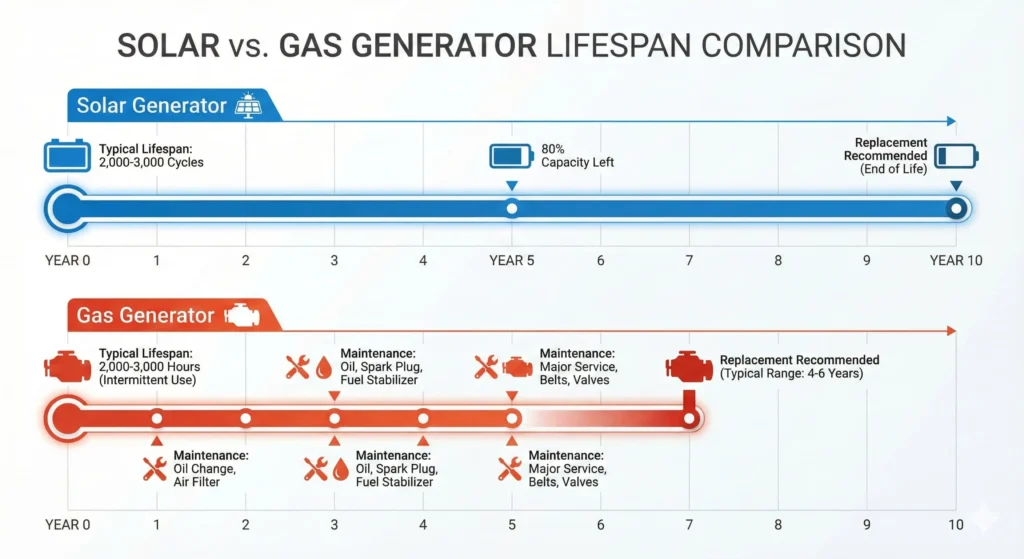
Quality gas generators last 2,000-3,000 hours with proper maintenance. At 500 hours/year (heavy use), that’s 4-6 years before replacement.
Solar generators have no engine to wear out. Battery degradation is the limiting factor. Lithium batteries last 2,000-3,000 charge cycles before capacity drops to 80%. That’s 5-10 years depending on usage.
Both need eventual replacement, but solar has fewer failure points. No carburetor to gum up, no recoil starter to break, no fuel pump to fail.
Best Use Cases
Choose Solar If:
✅ You need backup power a few times per year
✅ Noise matters (camping, RV, residential)
✅ You want zero maintenance
✅ Indoor use is required
✅ Moderate power needs (under 2,000W)
✅ You have time to recharge between uses
For most people, a 1,000-2,000Wh solar generator like the Jackery 1000 Plus covers typical backup needs without breaking the bank. Pair it with 200-400W of panels for reliable recharging.
Choose Gas If:
✅ You need high power output (3,000W+)
✅ Extended runtime is critical (multi-day outages)
✅ Weather is unpredictable
✅ Lower upfront cost matters
✅ You’re okay with noise and maintenance
✅ Fuel storage isn’t a problem
A reliable gas option like the Champion 4000W generator costs around $500 and provides serious power for whole-home backup. Just plan for fuel storage and regular maintenance.
For serious off-grid setups, many people run both. Solar handles daily needs, gas kicks in during extended bad weather. See our inverter setup guide for hybrid system options.
FAQ
Can a solar generator replace a gas generator?
For moderate power needs (under 2,000W) and occasional use, yes. For high power demands or extended outages in bad weather, no. Solar works great as primary with gas as backup.
How long do solar generators last?
5-10 years typically, limited by battery degradation. Quality lithium batteries handle 2,000-3,000 charge cycles before dropping to 80% capacity.
Are solar generators worth the cost?
If you use backup power regularly, yes. Break-even is 2-3 years compared to gas. If you rarely need power, gas is cheaper upfront.
Can you run a solar generator while charging?
Yes, most solar generators support pass-through charging. You can power devices while panels recharge the battery simultaneously.
What size solar generator equals a 3500W gas generator?
You’d need 3,000W+ solar generator, which costs $3,000-5,000. For that power level, gas is more cost-effective unless noise or emissions are deal-breakers.
Final Verdict
Solar generators cost more upfront but save money long-term through zero fuel costs. They’re silent, maintenance-free, and safe indoors. Perfect for camping, RVs, and occasional backup power.
Gas generators deliver more power for less money initially. They run unlimited hours with fuel and work regardless of weather. Best for high power needs and extended outages.
The right choice depends on your specific needs. Moderate power and hate noise? Solar. Need serious power and don’t mind maintenance? Gas. Want both? Run solar daily and keep gas as backup.
For complete system planning, check our guides on battery storage and starting off-grid life.

Lio Verdan writes about solar energy, off-grid living, and eco-innovation through Gridova Living — a platform dedicated to energy freedom and sustainable technology.