By Lio Verdan, Gridova Living ⚡
Introduction — Why Clean Solar Panels?
Clean solar panels = more energy. Dust, pollen, and bird droppings can reduce efficiency by up to 20%. With a quick and safe cleaning routine, you’ll capture more sunlight — and store more power for your off-grid nights.
In this guide, you’ll learn how to clean your solar panels safely, what tools to use, and how to keep your system performing like new. Simple, effective, and beginner-friendly — the Gridova way.
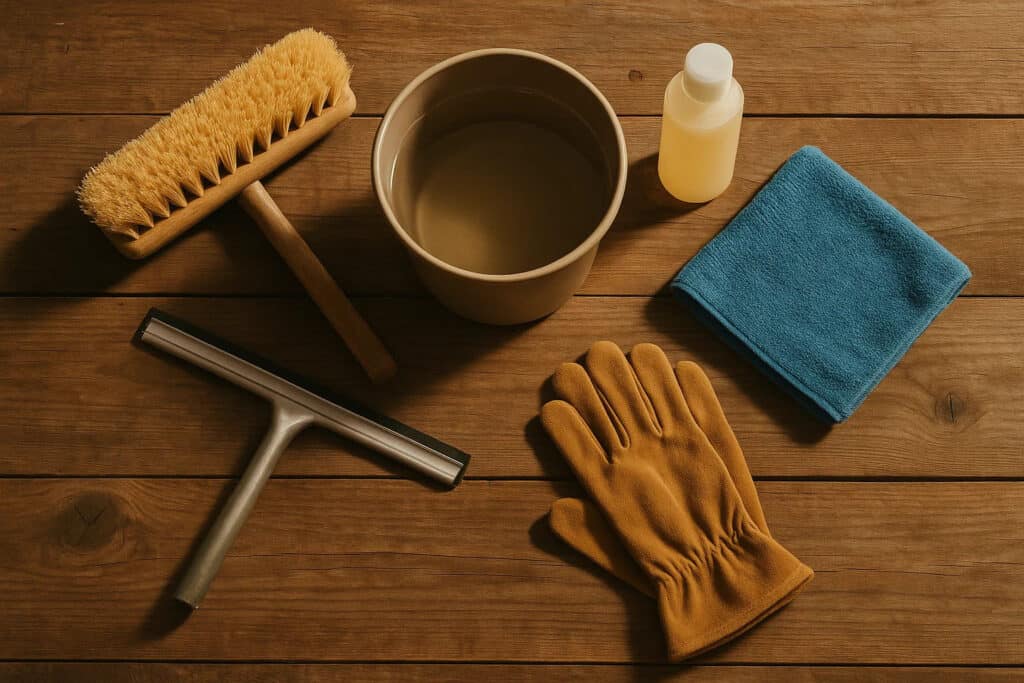
What You’ll Need
- Soft brush or squeegee with extension pole
- Bucket + lukewarm water
- Mild biodegradable soap
- Microfiber cloth
- Non-slip shoes + gloves
Pro Tip: A gentle clean can increase your solar output by 5–20% — that’s hours of extra light, warmth, or battery charge every evening.
Step-by-Step — Clean Your Panels Safely
1. Power & Timing
Turn off your system if required by your manual. Clean early in the morning or late afternoon — when the panels are cool to touch.
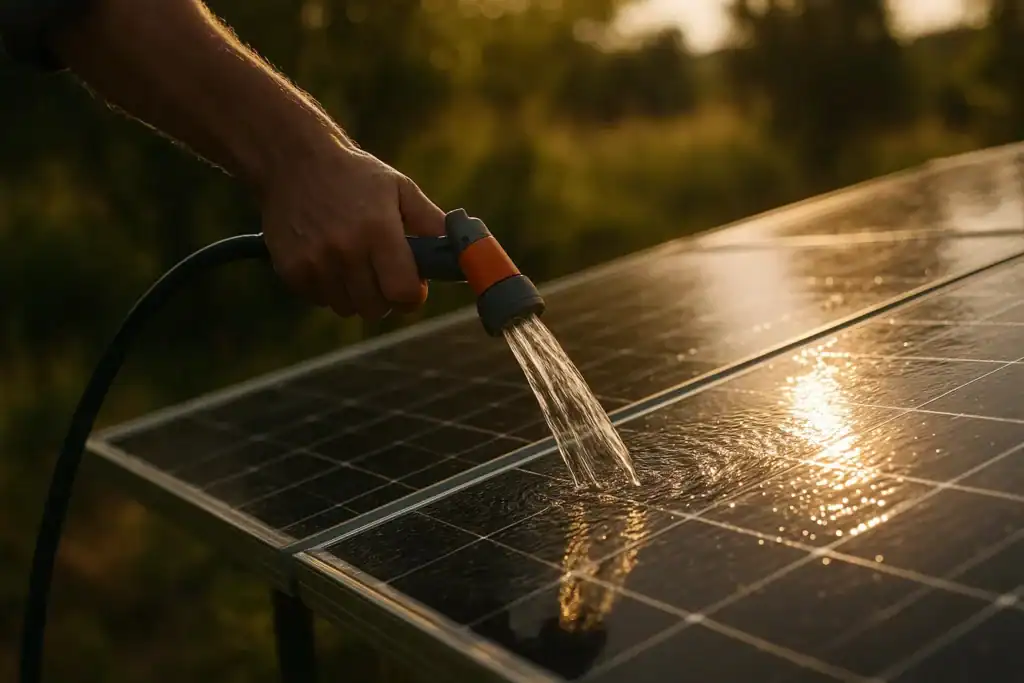
2. Rinse Gently
Use a low-flow hose or a bucket to remove dust and loose dirt. Never use pressure washers — they can crack the glass or damage seals.
3. Soap & Brush
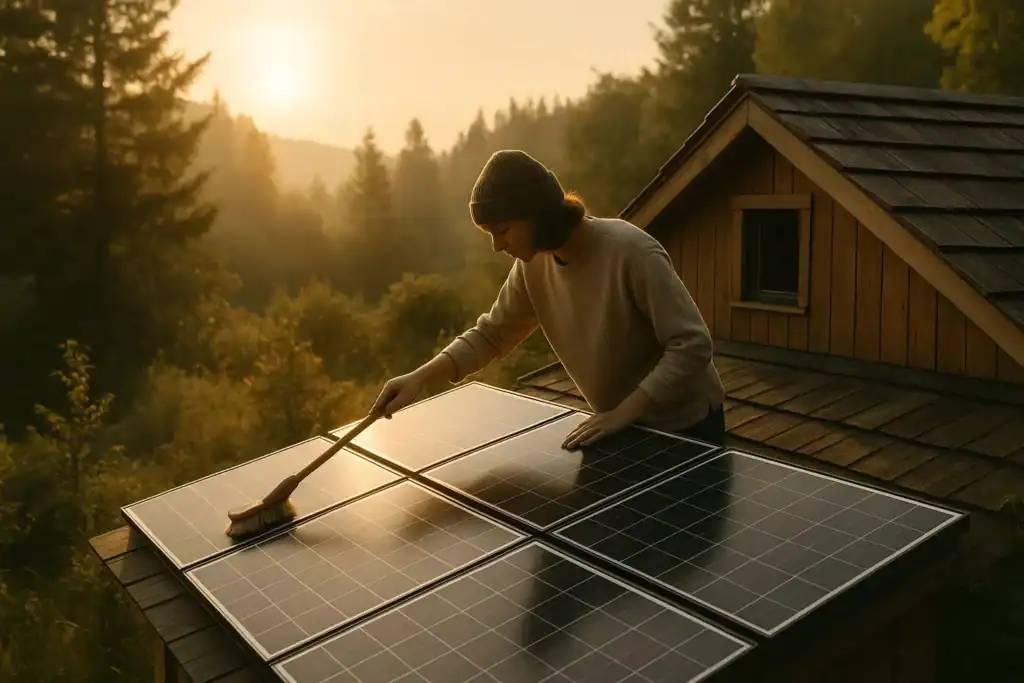
Mix a few drops of mild soap into your bucket. Use a soft brush or squeegee to clean the surface — avoid scrubbing hard. Let the brush glide naturally.
4. Rinse Again
Remove all soap residue to prevent cloudy film on the glass. Clear panels absorb more sunlight efficiently.
5. Dry Finish
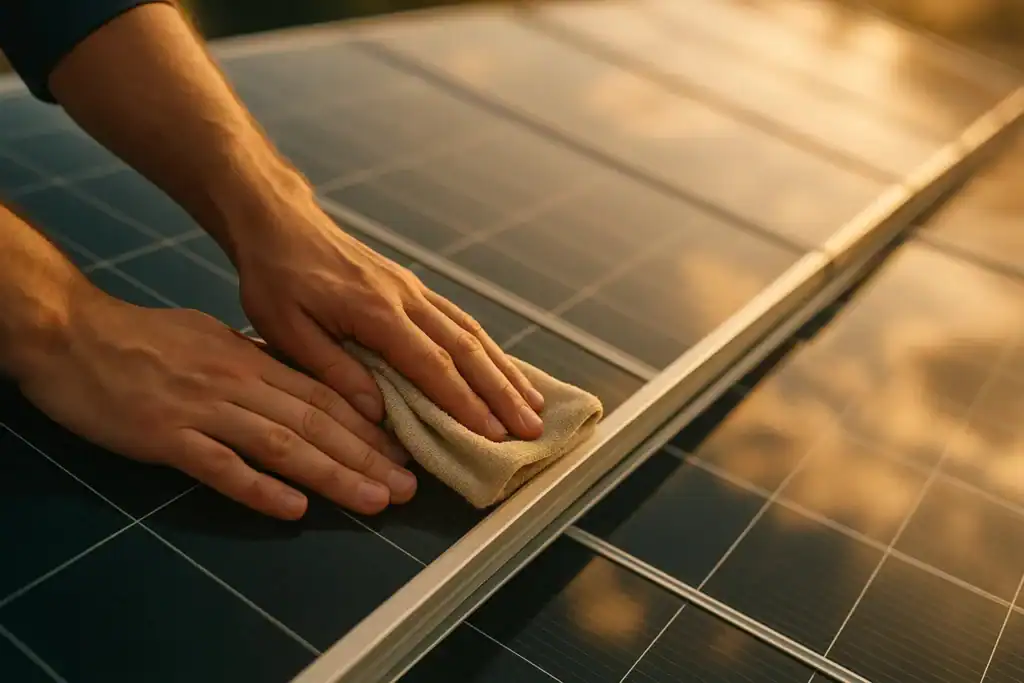
Wipe the edges with a microfiber cloth to prevent mineral spots. For large arrays, let sunlight dry the surface naturally.
Why Cleaning Matters
Each dust layer acts like a filter, reducing sunlight by 5–10%. Regular cleaning means:
- Higher battery charge at night
- Longer inverter and panel lifespan
- Better return on your solar investment
If your panels still seem weak after cleaning, check your Solar Battery Storage and Inverter Basics for potential system issues.
Pro Tips for More Efficiency
- Frequency: Clean every 1–3 months in dusty areas; after pollen season or sandstorms.
- Angle advantage: Tilted panels self-clean better with rain, but still need checks.
- No harsh gear: Avoid solvents, abrasive pads, or saline water.
- Record output: Compare inverter readings before and after cleaning.
Maintenance Schedule
Monthly: Visual check for leaves, droppings, and debris.
Quarterly: Clean panels + check wiring and mountings.
After storms: Rinse panels and verify output on your charge controller.
FAQs — Common Cleaning Questions
Do I need special cleaning products?
No. Use mild soap and clean water. Avoid chemicals that can damage the glass or frame seals.
Can rain replace cleaning?
Rain helps but doesn’t remove sticky dirt or droppings. A quick manual rinse keeps performance high.
Will cleaning void my warranty?
Follow your manufacturer’s manual. Use non-abrasive tools and avoid high pressure. When in doubt, call your installer.
Conclusion — Clean Panels, Clear Power
Regular cleaning is more than maintenance — it’s an act of energy awareness. Every ray you save today lights your home tonight.
Want to learn more about your full off-grid setup? Check out:

Lio Verdan writes about solar energy, off-grid living, and eco-innovation through Gridova Living — a platform dedicated to energy freedom and sustainable technology.