
Introduction
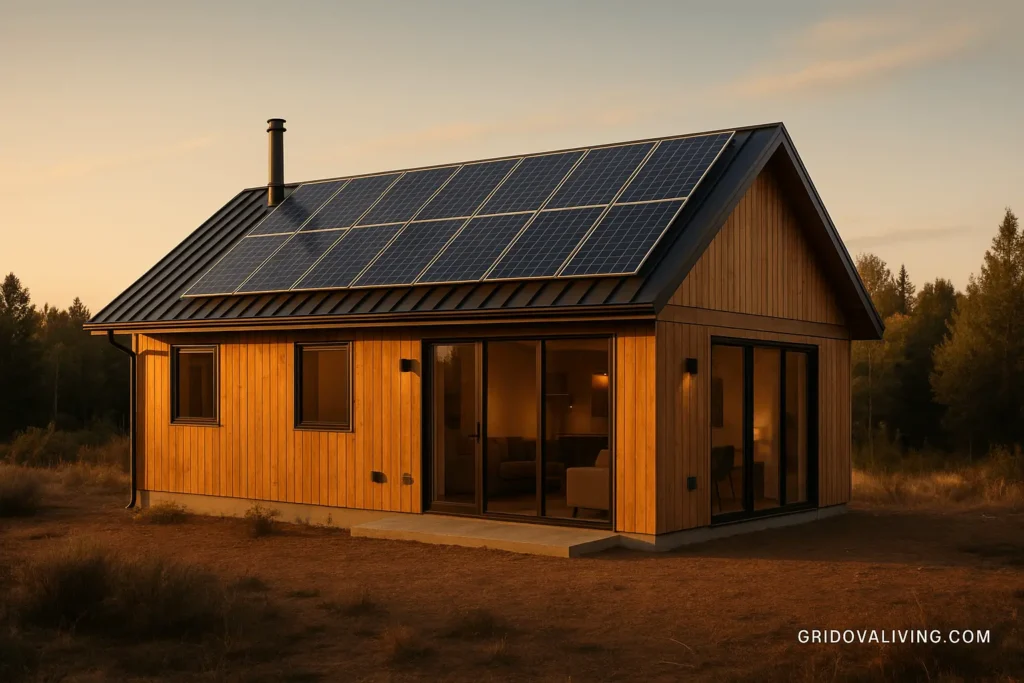
Gridova Living shares practical, trustworthy, and easy-to-follow guides about solar energy, off-grid living, and conscious technology. This article explains how to transform sunlight into clean, reliable electricity — and what to know before setting up your own solar system.
1. What Is a Solar Panel?
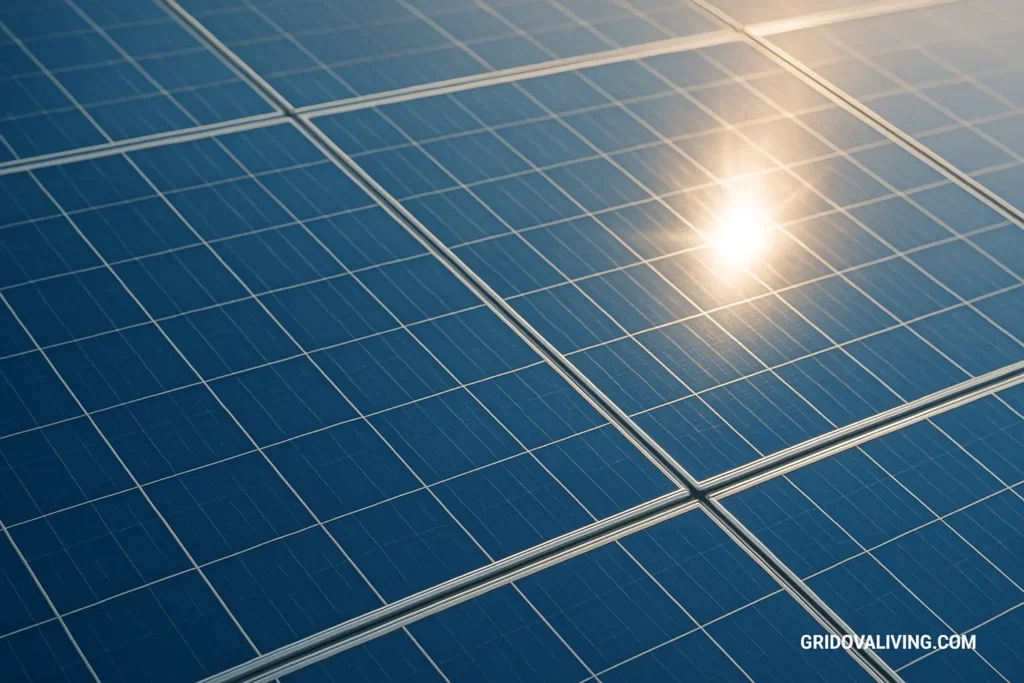
Solar panels, also called photovoltaic modules, capture sunlight and convert it into direct-current (DC) electricity. Inside every panel are silicon cells that generate power when photons strike their surface. The stronger the light, the more electrons flow — creating renewable energy without fuel or emissions.
2. How a Home Solar System Works
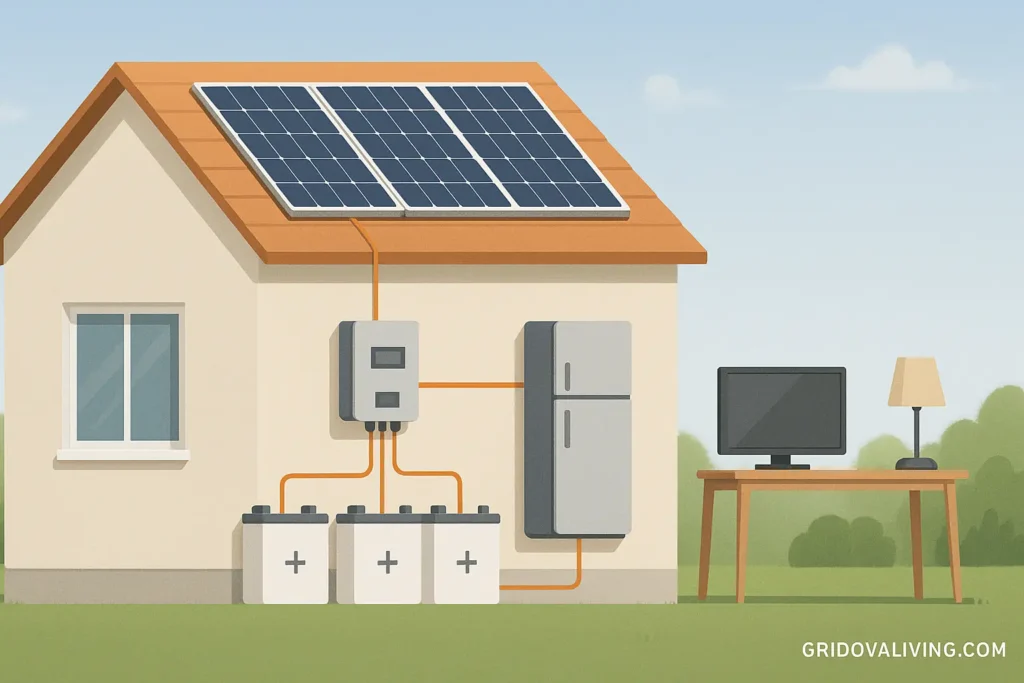
- Solar Panels – collect sunlight.
- Charge Controller – stabilizes voltage.
- Battery Bank – stores power for night use.
- Inverter – converts DC to AC for home devices.
- Distribution Board – sends power through your house.
Each part works together like a silent ecosystem — capturing daylight, storing it, and re-releasing it when you need it most.
3. Estimating Your Energy Needs
Before installation, list your daily devices (lights, fridge, laptop, router). Use this formula:
Watt-hours per day = device wattage × hours used.
Sum them all to find your daily load. Then choose panels with at least 30–40 % extra capacity to cover cloudy days and seasonal loss.
4. DIY or Professional Installation?
- DIY setups work for small cabins or tiny houses; they’re affordable and educational.
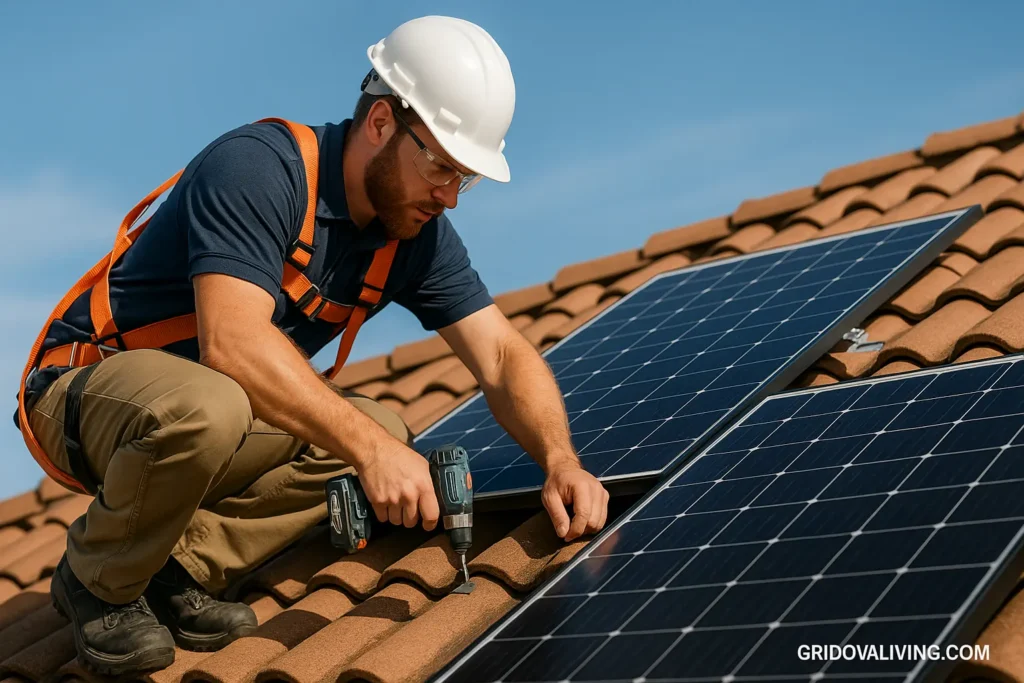
- Professional systems are better for full homes; they include safety wiring, grounding, and warranty service.
If you’re new to solar, start small — even one portable kit can teach you how energy independence feels.
5. Cost and Return on Investment
The average residential solar system costs $1.2 – $1.8 per watt. A 5 kW system can save $700–$1000 per year, depending on local sunlight and energy rates. Most setups pay for themselves within 4 to 6 years — and last 20 + years with minimal maintenance.
6. Maintenance and Lifespan
Keep panels clean, check wiring twice a year, and monitor output with a simple app or inverter screen. Avoid tree shade, snow buildup, and loose connectors. Properly maintained panels keep about 80 % efficiency after 25 years.
Disclaimer
All content on this site is for informational and educational purposes only. Always follow local electrical regulations and consult a certified installer when working with high-voltage systems.
Next project idea: Solar Battery Storage — Power Your Nights Off-Grid
Last updated: November 9, 2025

Lio Verdan writes about solar energy, off-grid living, and eco-innovation through Gridova Living — a platform dedicated to energy freedom and sustainable technology.