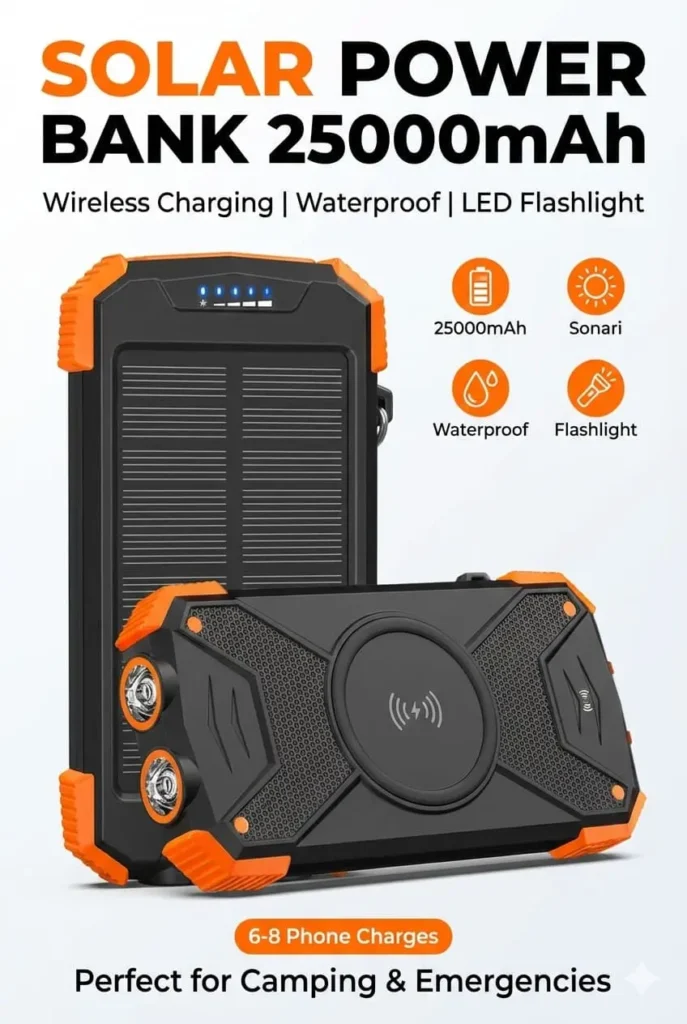
When your phone dies in the middle of nowhere, you’re not just disconnected—you’re vulnerable. A new category of portable chargers has emerged that combines solar charging, massive battery capacity, and emergency features into one rugged device. These solar power banks are designed for people who spend time outdoors, travel frequently, or simply want reliable backup power that doesn’t depend on wall outlets.
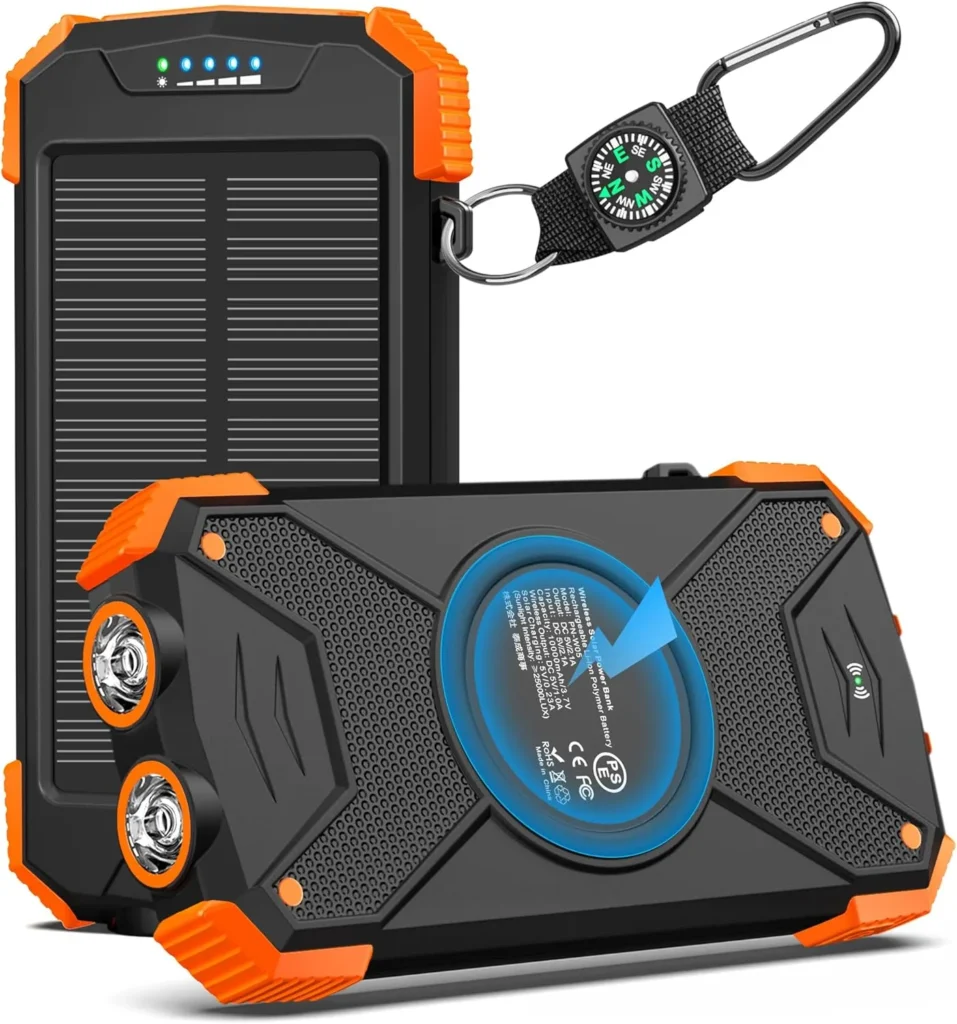
The device we’re looking at packs a 25,000mAh battery, dual USB outputs, a built-in flashlight, and solar panels that can recharge the unit using nothing but sunlight. It’s waterproof, shockproof, and built to survive drops, dust, and weather that would kill a standard power bank.
Here’s what makes this particular model stand out and why it’s gaining attention from hikers, campers, and emergency preparedness enthusiasts.
What exactly is this thing?
A solar power bank is a portable battery charger with integrated solar panels. This specific model holds 25,000mAh of power, which translates to roughly 6-8 full charges for most smartphones. It features two USB output ports for charging multiple devices simultaneously, a built-in LED flashlight with multiple modes, and a ruggedized exterior designed for outdoor use.
The solar panel on top isn’t a gimmick—it’s a genuine backup charging method. While it won’t fully recharge the battery in a single afternoon, it provides a way to extend runtime indefinitely when you’re off the grid. The battery can also be recharged via standard micro USB input when you have access to power.
Key construction includes a reinforced plastic shell with rubberized edges, water-resistant sealing, and a carabiner hook for attaching to backpacks or gear.
Why people are buying these
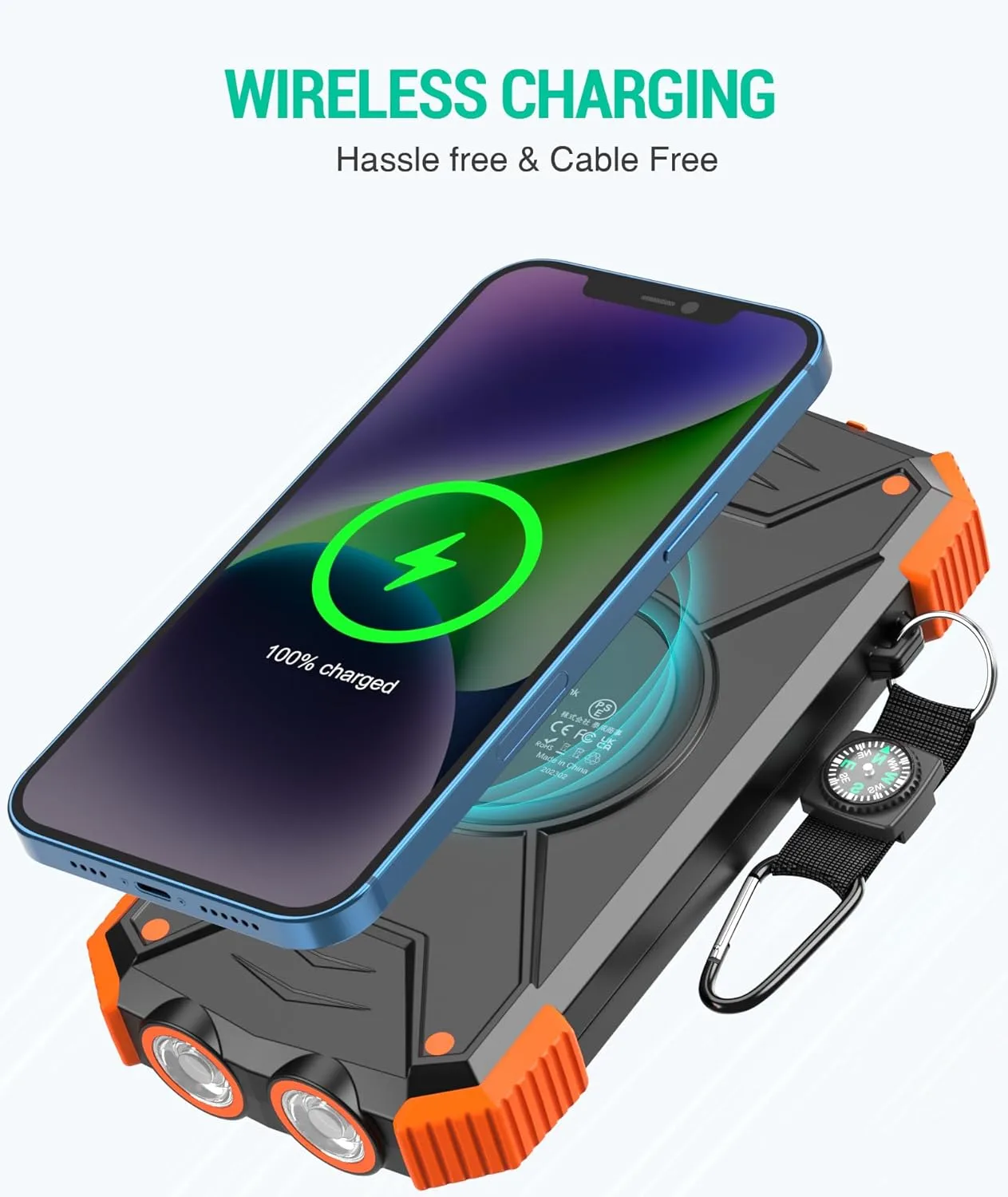
Outdoor enthusiasts and preparedness-minded individuals are drawn to these units for three main reasons: capacity, durability, and independence from the grid.
Capacity: 25,000mAh is substantial. Most phones have batteries between 3,000-4,000mAh, meaning this unit can charge a typical smartphone six to eight times before needing a recharge. Tablets take 2-3 charges. Small devices like wireless earbuds or smartwatches can be charged dozens of times.
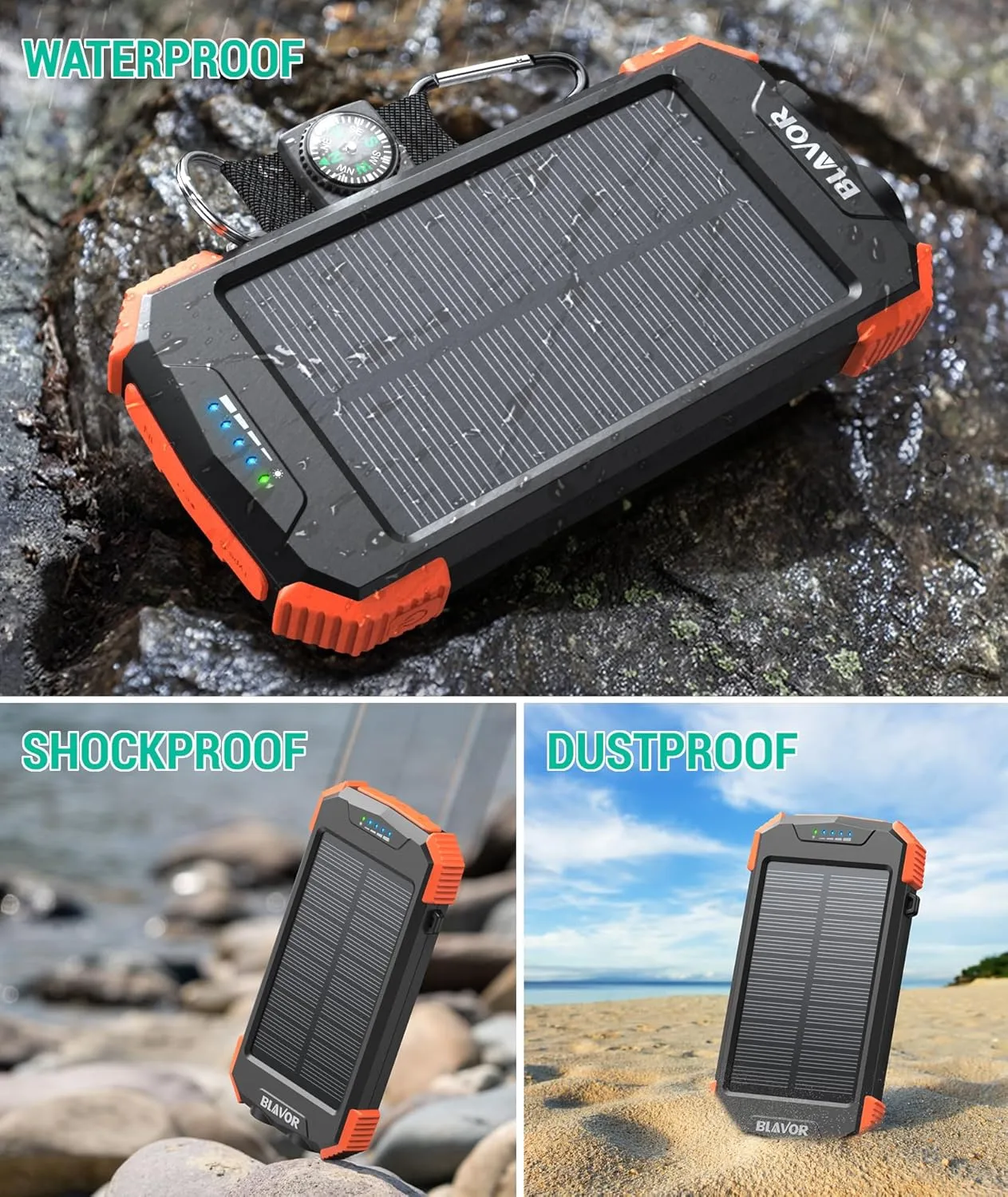
Durability: The unit is rated IP66 for water and dust resistance. It’s designed to handle rain, splashes, and dusty environments. The rubber shell and reinforced corners protect against drops. This isn’t delicate electronics—it’s built for bags, pockets, and outdoor conditions.
Solar independence: The integrated solar panel provides 1-2% charge per hour in direct sunlight. That’s slow, but it’s enough to keep the bank topped up during multi-day trips or to maintain charge during extended power outages. If you’re hiking for a week, leaving this on your pack while you walk gradually recharges it.
Beyond the core features, the built-in flashlight has multiple modes: steady, strobe, and SOS. The compass on the case is functional. The dual USB ports mean you can charge your phone and a headlamp simultaneously.
How it performs in real use
Users report that this power bank delivers on its capacity claims. A fully charged unit will indeed charge an iPhone or Android phone 6-8 times depending on the model. Charging speed is standard USB, not fast charge, but it’s adequate for overnight charges or topping up devices during the day.
Solar charging is slow but real. In direct summer sun, the panel adds roughly 1-2% charge per hour. Leave it on your dashboard or pack for a full day and you’ll gain 10-15% charge. This isn’t a primary charging method—it’s an emergency backup and a way to extend the bank’s runtime when you’re away from power for extended periods.
The flashlight is surprisingly useful. The LED is bright enough for camp tasks, trail navigation, or emergency signaling. Strobe and SOS modes are standard for distress situations. Battery drain from flashlight use is minimal—expect 20+ hours of continuous light on a full charge.
Water resistance holds up in rain and splashes, though full submersion isn’t recommended despite the IP66 rating. Dust and dirt haven’t caused issues for users who’ve taken these into deserts, beaches, and construction sites.
The unit is chunky. At roughly 6.5 x 3.5 x 1.5 inches and about 1.2 pounds, this isn’t pocket-friendly. It fits in backpack side pockets, glove boxes, and larger bags. The weight is noticeable but not burdensome for camping or emergency kits.
Check Current Price on Amazon
What you need to know before buying
Solar charging is supplemental: Don’t buy this expecting to fully charge it via solar in a day. The panel is for emergency situations and slow trickle charging. Primary charging should be via USB input before your trip.
Charging speed is standard: This uses regular USB output, not Quick Charge or USB-C fast charging. Phones charge at normal speed, which is fine for overnight or passive charging but slower than wall adapters.
Size matters: This is a large power bank. Compare dimensions to your current gear. If you need something pocket-sized, this isn’t it. If you’re packing for a trip or building an emergency kit, the size is reasonable.
LED indicators: Four LED lights show remaining charge in 25% increments. It’s functional but not precise. You’ll know when you’re at 75%, 50%, 25%, or nearly empty, but not exact percentage.
Temperature tolerance: Lithium batteries don’t like extreme cold. In freezing temperatures, capacity drops temporarily. The unit works, but you’ll get fewer charges. Store it inside your jacket if you’re in sub-freezing conditions.
Where it works best
This solar power bank excels in scenarios where you’re away from reliable power for 2-7 days and need to keep essential devices charged. Multi-day hiking trips, camping, road trips through remote areas, emergency preparedness kits, and power outage backup.
It’s less ideal for daily commuting, office use, or situations where you have regular access to wall outlets. The solar feature and rugged build add size and weight that aren’t necessary for urban environments.
Outdoor photographers, overlanders, festival campers, and disaster preppers get the most value. If your phone dying means more than inconvenience—if it means you can’t navigate, call for help, or access critical information—this type of backup power makes sense.
Practical uses people don’t consider
Car emergency kit: Keep this in your glove box. If you’re stranded, you have light, phone charging, and a compass.
Storm preparation: Charge it fully before hurricane season or winter storms. When power goes out, you have days of phone charging available.
Festival/event backup: Multi-day festivals with limited charging access become easier. Share charging with friends via the dual ports.
Remote work locations: If you work from a van, boat, or off-grid cabin, this supplements your primary power setup.
Backup for backup: Even if you have other charging solutions, redundancy matters when you’re remote. This is lightweight insurance.
Check Current Price on Amazon
The bottom line
This solar power bank delivers solid performance at a reasonable price point. It holds the charge it claims, survives outdoor conditions, and provides genuine solar backup charging when you need it. The flashlight is useful, the build quality is solid, and the capacity is enough for multiple days of device charging.
The solar panel won’t replace wall charging for primary use, but it extends runtime significantly during extended trips and provides peace of mind in emergency situations. If you spend time outdoors, travel to remote areas, or want reliable backup power during outages, this type of device fills a real need.
It’s not the sleekest power bank available, but it’s not trying to be. It’s built for people who prioritize function over form and need power that works when they’re far from civilization.
Check Current Price on Amazon

Lio Verdan writes about solar energy, off-grid living, and eco-innovation through Gridova Living — a platform dedicated to energy freedom and sustainable technology.